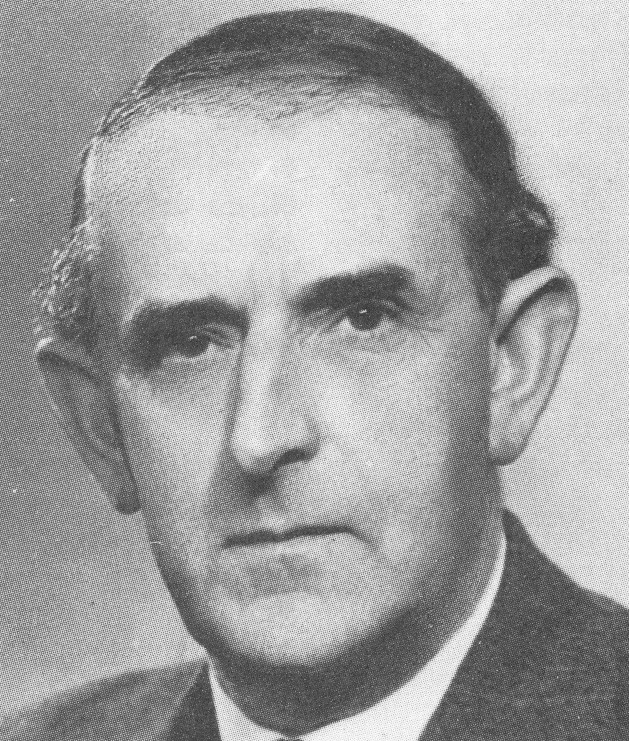
Sydney Camm was born on 5th August 1893 at 10 Alma Road, Windsor, Berkshire, the eldest of 12 children to Frederick Camm, a carpenter, and Mary Smith. His brother Frederick James Camm became a technical author, and created the Practical Wireless magazine.
In 1901 Camm began attending the Royal Free School on Bachelors Acre in Windsor. In 1906 he was granted a Foundation Scholarship and in 1908 he left to become an apprentice carpenter. He developed an interest in aeronautics, and with his brothers began building model aircraft which were supplied to Herberts’ shop on Eton High Street. After finding that they could obtain a higher price they began selling direct to boys at Eton College, delivering the models in secret to avoid the attention of Herbert’s and the school authorities. These activities led Camm to become a founding member of the Windsor Model Aeroplane Club in early 1912. In the same year, he and others at the club succeeded in building a man-carrying glider.
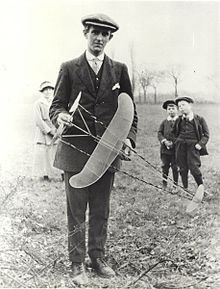
Shortly before the start of World War I Camm obtained a position as a shop-floor carpenter at the Martinsyde aircraft company which was located at the Brooklands racing circuit in Weybridge, Surrey. He was soon promoted to the drawing office, where he remained throughout the war.
After the company went into liquidation in 1921, Camm was employed by George Handasyde, who had created his own aircraft manufacturing company, which was responsible for the creation of the Handasyde Monoplane.
Having married in 1915, Sydney and wife Hilda had a daughter in 1922.
In November 1923 Camm joined the Hawker Aircraft Company (later Hawker Siddeley) based at Canbury Park Road in Kingston upon Thames as a senior draughtsman. His first design was the Cygnet, the success of which led to his being appointed chief designer in 1925. His first design was the Cygnet, and he was appointed Chief Designer in 1925. At that time, in association with Hawker MD Fred Sigrist, he developed a system of construction using jointed metal tubes, more complex than the alternative, welded structure.
During his employment at Hawker he was responsible for the creation of 52 different types of aircraft, of which a total of 26,000 were manufactured. Among his early designs were the Tomtit, Hornbill, Nimrod, Hart and Fury. At one time in the 1930s 84 per cent of the aircraft in the RAF were designed by Camm.
He then moved on to designing aeroplanes that would become mainstays of the RAF in the Second World War including the Hawker Hurricane, Hawker Typhoon and Hawker Tempest.
Camm was evidently a hard taskmaster, who did not suffer fools gladly. As Hawker’s wartime Chief Project Engineer, Sir Robert Lickey later recalled:
“Camm had a one-tracked mind – his aircraft were right, and everybody had to work on them to get them right. If they did not, then there was hell. He was a very difficult man to work for, but you could not have a better aeronautical engineer to work under. […] With regard to his own staff, he did not suffer fools gladly, and at times many of us appeared to be fools. One rarely got into trouble for doing something either in the ideas line, or in the manufacturing line, but woe betide those who did nothing, or who put forward an indeterminate solution.”
Among the engineers who worked with Camm at Hawker were Sir Frederick Page (later to design the English Electric Lightning), Leslie Appleton (later to design the advanced Fairey Delta 2 and Britain’s first air-to-air missile, the Fairey Fireflash), Stuart Davies (joined Avro in 1936 and later to be chief designer of the Avro Vulcan), Roy Chaplin (became chief designer at Hawker in 1957) and Sir Robert Lickley (chief project engineer during the war, and later to be chief engineer at Fairey).
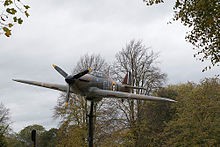
A full – size Hawker Hurricane replica has been placed near the River Thames, Windsor, to honour Sir Sydney Camm’s aircraft
Notable among Camm’s post-war work is his contribution to the design of the Hawker Siddeley P.1127 / Kestrel FGA.1, the progenitor of the Hawker Siddeley Harrier. The Harrier is a well-known vertical takeoff and landing (VTOL) aircraft designed at Hawker Siddeley, which would later merge into British Aerospace, now known as BAE Systems. The Harrier was one of the radical aircraft which took shape in postwar Britain, which required the bringing together of many important technologies, such as vectored thrust engines like the Bristol Siddeley (later Rolls-Royce) Pegasus and technologies like the Reaction Control System. Camm played a major role in determining these and other vital Harrier systems. In 1953, Camm was knighted for these and other achievements and his contribution to British Aviation. The P.1127 first flew on 21 October 1960. Working with Camm on this aircraft and the Hunter was Professor John Fozard, who became head of the Hawker design office in 1961 and would write a biography of Camm in 1991.
He also served as President of the Royal Aeronautical Society from 1954 to 1955. Since 1971 the RAeS has held the biennial Sir Sydney Camm Lecture in June, given by the current commander-in-chief of RAF Air Command.
Camm worked for Hawker until his retirement in 1965, succeeded by John Fozard,even then planning an aircraft capable of Mach 4, and remained on the board of Hawker’s successor company, Hawker Siddeley (later merged with British Aerospace, now BAE Systems) until his death.
A resident of Thames Ditton since the 1930s, he was playing golf at the nearby Richmond Golf Course when he died on 12th March 1966, aged 72. He was buried in Long Ditton Cemetery, Long Ditton, in the County of Surrey.
In 1966, Camm was awarded the Guggenheim Gold Medal, which had to be presented posthumously.
 All Aero