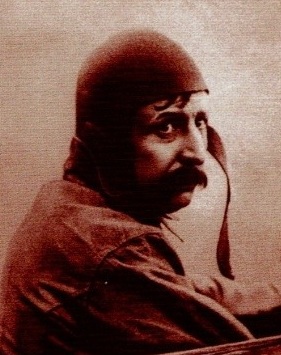
The French aviation pioneer Louis Bleriot achieved a unique place in aviation history by making the first crossing of the English Channel in a powered aircraft (his Type XI monoplane) on July 25, 1909. This success resulted in the formation of the a company to produce the Type XI monoplane, and many significant flights were made with these aircraft.
Bleriot flew about twenty-four miles from Clais to Dover in 37 miniutes, being at no time more than 100 ft above the water. When he reached Dover, he was unable to rise over the cliff and had to search for a gap in them. In the end he landed in a field near the castle. The flight won the Frenchman a prize of £1,000, and made him a popular hero. More important, everyone could now see the possibilities of the aeroplane.
The prize was given by the Daily Mail. It had been offered in October 1906, together with a prize of £10,000 for the first flight from London to Manchester, a distance of 183 miles.

In post-war years Bleriot took over SPAD. The SPAD (Societe pour l’Aviation et ses Derives) concern, although headed by Louis Bleriot, operated as a separate organisation from the Societe Bleriot-Aeronautique until 1921, when SPAD was absorbed and the subsequent progeny of its design team became officially known by the title of Bleriot SPAD.
In a 1934 visit to Newark Airport in the United States, Louis Bleriot predicted commercial overseas flights by 1938. Unfortunately, he would not see this come to fruition as his death from a heart attack took his life on August 2nd, 1936 in Paris, France – bring an end to this French hero’s legacy. The Louis Bleriot Medal, established in 1936, was aptly named in his honor and would be awarded to individuals involved in record-setting flights thereafter. The award is still handed out to this day.

 All Aero