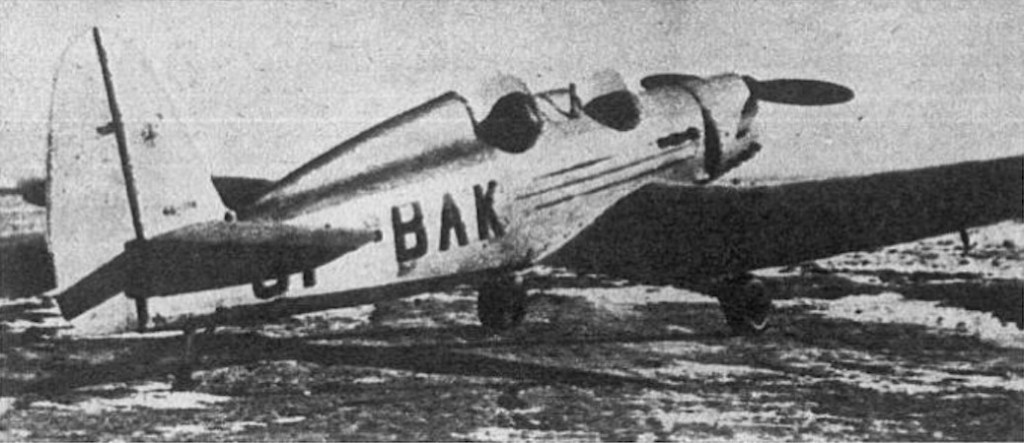
In 1946, the CSS office received an order from the Ministry of Communications to develop thrree aircraft: school, training and aerobatic and passenger. In 1947, the first training aircraft project was developed, which was the CSS-10. The constructors of the aircraft were Franciszek Misztal and Stanisław Lasota.
The CSS-10 aircraft is a two-seat low-wing monoplane of mixed construction. The fuselage is made of steel pipes, the wings are of wooden structure.
Simple wings with a wooden structure. The wing has one spar, covered with plywood from the front. The back part of the wing is covered with fabric. Slotted ailerons, differentially deflected, with a wooden frame, covered with fabric. The wing has no flaps.
Open cabins, second cabin located above. Truss hull, welded from steel tube. The hull in the cabins is covered with duralumin sheet, in the rear part with fabric on profiled slats.
Trapezoidal tail with rounded ends. Double-girder fins, nose caisson covered with plywood, the rest with canvas. Rudders with a wooden frame, covered with canvas.
Fixed landing gear with tail wheel.
Since the construction of the CSS-10 aircraft in the workshops in Okęcie was impossible, the construction of prototypes began at WSK PZL Mielec. Corrections have been made to the design. The Walter Mikron II engine was used, with a power of 65 hp (48 kW). Therefore, the designation of the aircraft was changed to CSS-10 A. The CSS-10 A prototype, made its first flight on 3 September 1948 piloted by Ludwik Lech.
The CSS-10 aircraft was transported to Warsaw to the Central Aviation Institute. At GIL, the aircraft was tested. The aircraft did not perform well because the engine was underpowered. Due to the low engine power relative to the gross weight, the aircraft had a long take-off, low climb and unsatisfactory stall and spin characteristics and was deemed unsuitable for pilot training.
Another prototype, designated CSS-10 C, was equipped with a 105 hp (77 kW) Walter Minor 4-III engine. In addition, the wing received a slight slant. The first flight was made on 24 April 1949. This aircraft was also transported to GIL. The tests of the aircraft went well and the aircraft was cleared for aerobatics. In 1952, the aircraft was subjected to state tests, as a result of which the aircraft was approved for flights as a training and training aircraft. It was planned to build 40 aircraft of this type, but due to the lack of engines, the project was not implemented.
At that time, it was planned to start production of Walter engines under license in Poland. Production of the engines was not undertaken.
It was planned to produce 40 aircraft of this type, but due to the lack of Walter Minor 4-III engines, the project was finally abandoned.
In 1952, the planes were parked behind the hangar. The CSS-10A aircraft was destroyed (1955). In 1955, the CSS-10 C aircraft was renovated by members of the Warsaw Aero Club at Okęcie. The aircraft was shown at the Aviation Exhibition at Okęcie (1956). In order for the aircraft to fly, it was necessary to repair the landing gear, which was not carried out. In 1960 the plane was written off.
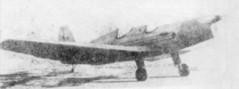
There was also an aircraft design, which was marked CSS-10 B. It differed from the CSS-10 C aircraft with a covered cabin. This prototype was not built.
CSS-10 A
Engine: Walter Mikron III, 48 kW (65 hp) take-off power / continuous 35 kW (48 hp).
Span: 10.70 m
Wing area: 15.73 sq.m
Length: 7.36 m
Height: 1.96m
Empty weight: 462 kg
Take-off weight: 691 kg
Payload: 149 kg
Fuel capacity: 82 lt
Top speed: 149 km/h
Cruising speed: 112 km/h
Landing speed: 75 km/h
ROC: 1.5 m/s
Ceiling: 2,250 m
Range: 310 km
TO run: 130 m
Landing run: 150 m
CSS-10 C
Engine: Walter Mikron 4-III, 77 kW (105 hp) take-off power / continuous 59 kW (80 hp)
Span: 10.58 m
Wing area: 15.73 sq.m
Length: 7.55 m
Height: 1.91m
Empty weight: 505 kg
Take-off weight: 756 kg
Payload: 251 kg
Fuel capacity: 82 lt
Top speed: 185 km/h
Cruising speed: 152 km/h
Landing speed: 72 km/h
ROC: 3.5 m/s
Ceiling: 4,900 m
Range: 440 km
Landing run: 130 m
TO run: 150 m
 All Aero