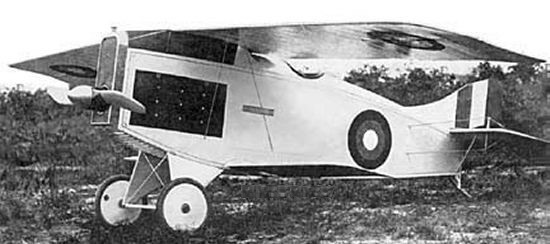
Co-designed with aviation pioneer, Vincent Burnelli (who only admitted to designing the fuselage), the Christmas Bullet was intended to meet a requirement for a military scout plane. The single-engine biplane was fitted with unbraced cantilevered wings designed to flex during flight. This gross lack of wing strength led to in-flight structural failures of both aircraft on 30 December 1918 and 1 May 1919.
This failure aside, the Bullet was noteworthy for being the first or one of the first aircraft to introduce a veneer-clad fuselage to reduce skin-friction drag and interconnected movable ailerons on the wing trailing edge.
Christmas received a patent for the Bullet design in 1914, a fact which he used to make the claim that he had invented the aileron. Dr. Christmas even claimed that the US government bought the rights to his movable ailerons in 1923 for $100,000 to avoid a copyright infringement suit, but there appears to be no evidence to support this claim. In fact, Christmas is only one of many early pioneers who claim to have invented the aileron, including the Wrights and Glenn Curtis.
Christmas seemed to have persuaded his backers to finance him based on two previous aircraft, for which no evidence ever existed.
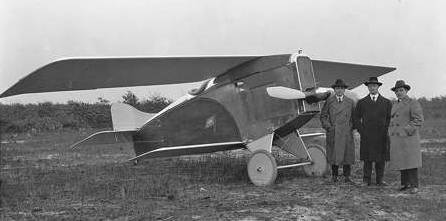
Christmas managed to find funding to build two ‘proof of concept’ aircraft to demonstrate his ‘ideas’ of a deliberately flexible wing inspired by those of birds, and tepid support from the US Army, which loaned an engine for ground-testing and the services of a test-pilot, Cuthbert Mills. A flight was attempted in the first aircraft, whereupon the wings peeled off during take-off, and the aircraft crashed, killing Mills. Christmas claimed that the aircraft had reached a speed of 197mph.
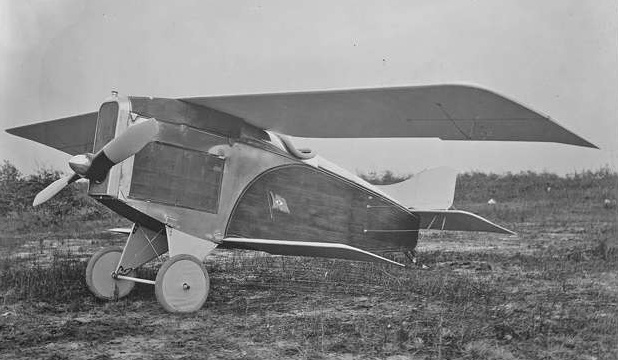
A second aircraft was built, and a propeller issued by the Army, despite the loaned engine having been destroyed during the unauthorised flight as Christmas had kept this secret. The second aircraft also crashed, also fatally. Christmas was still trying to sue people for claiming the aircraft had killed its pilots as late as 1930 and insisted the aircraft had reached a speed of 222mph.
 All Aero