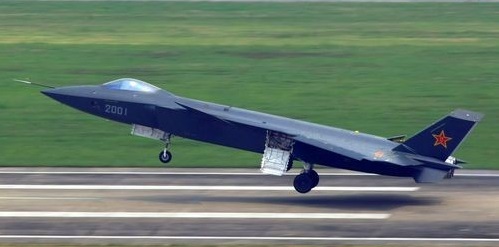
In the late 1990s, China initiated the J-XX program, aimed at developing a fifth-generation fighter. The Chinese revealed the first product of the J-XX program, the J-20, to the world in 2011. It is designed for high-alpha control and supercruise performance.
It uses internal weapons bays capable of carrying both short and long-range AAMs, and an advanced HUD and glass cockpit has been mounted on the aircraft. The prototypes were flying with Saturn AL-31F engines, allowing for flight testing to proceed while the planned WS-15 engines were under development.
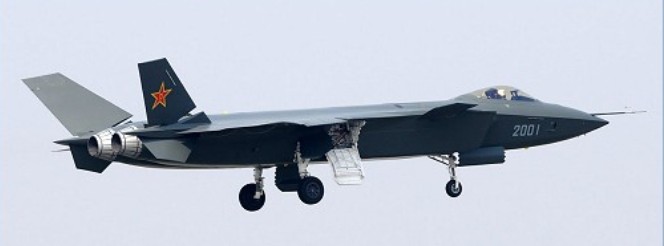
The Chengdu J-20 is a fifth generation stealth, twin-engine fighter aircraft prototype developed by Chengdu Aircraft Industry Group for the Chinese People’s Liberation Army Air Force. The J-20 made its first flight on 11 January 2011.

Unlike the F-22 and F-35, which prioritise all-aspect stealth, the J-20 employs a more selective approach to low observability, with emphasis on frontal aspect stealth to enable long-range penetration of enemy air defence networks.
Initially powered by Russian AL-31 derivatives, newer J-20s feature indigenous WS-10C engines, with the definitive WS-15 engines under development to enable sustained supercruise capability. These powerplants push the J-20 to speeds of Mach 2 (2,470 km/h).
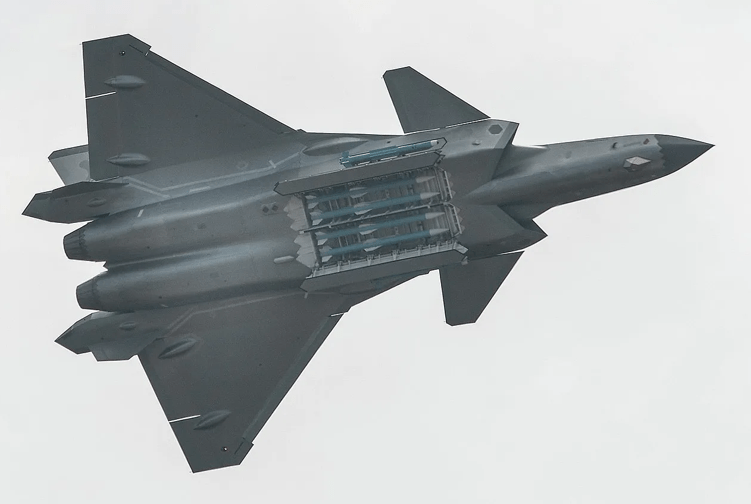
With over 200 units already operational and continuous evolution through multiple variants, the $100 million J-20 represents China’s commitment to challenging American air superiority in the Western Pacific.
Wingspan: 14 m / 46 ft 11 in
Length: 23 m / 75 ft 6 in
Crew: 1
 All Aero