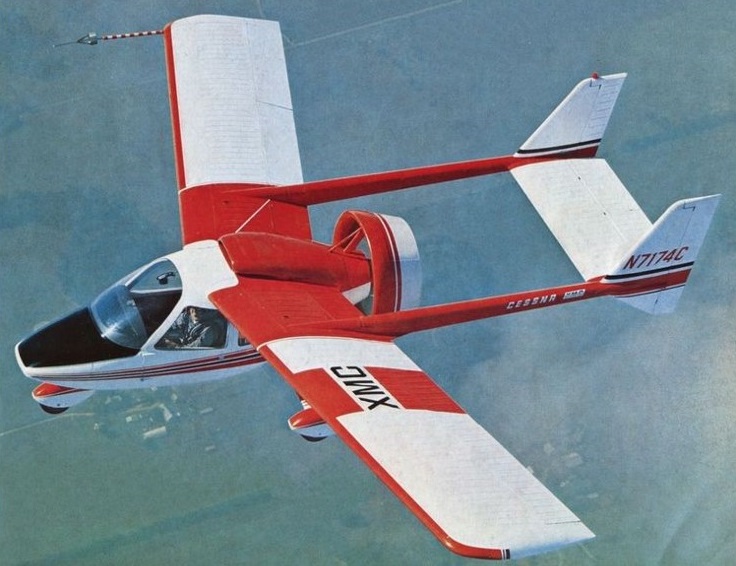
The two-seat Cessna XMC prototype technology demonstrator was built to test several concepts in light aircraft design including a ducted propeller and swept cantilever wing. The XMC employed metal-to-metal bonding, allowing for experimentation in expanded use for bonding in other types in the Cessna commercial product line. Additional stress testing was also conducted as necessary as the aircraft entered further testing and modification.
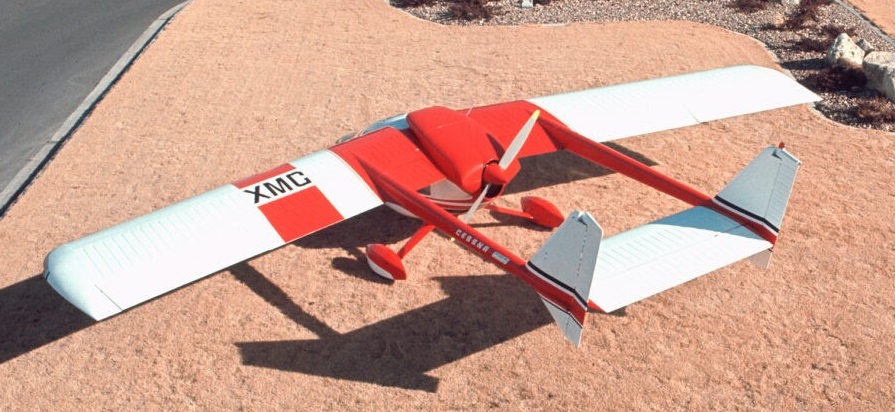
The sole prototype was registered as N7174C and given Cessna serial number 674. It was powered by a Continental O-200 100 hp (75 kW) engine mounted in pusher configuration. This was the same powerplant used in the then-current production Cessna 150. The tail boom was similar in design to that used on the Cessna Skymaster.

The first flight of the 1014 model was made on January 22, 1971 by Cessna test pilot Bruce Barrett. Then testing ground handling, flying characteristics and visibility.
Phase II testing began in May 1971, exploring methods of reducing weight and production costs for single and twin-engine Cessnas.
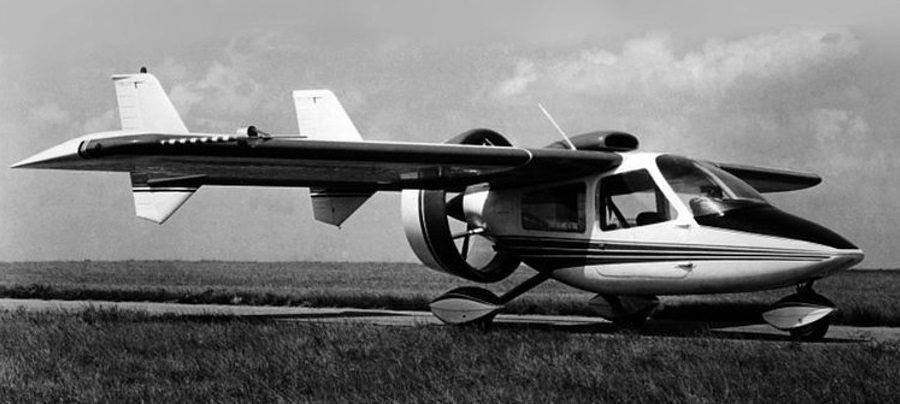
The aircraft was modified in 1972 and given a new model number, 1034. In this configuration it was first flown June 1, 1972, again with Bruce Barrett at the controls, using a shrouded propeller to test improvements in propeller efficiency and reduction of noise in Phase III. The spatted nose gear was replaced by a wheel fairing, as was the main gear. An increased vertical stabilizer area and revised wing tips were also tested.
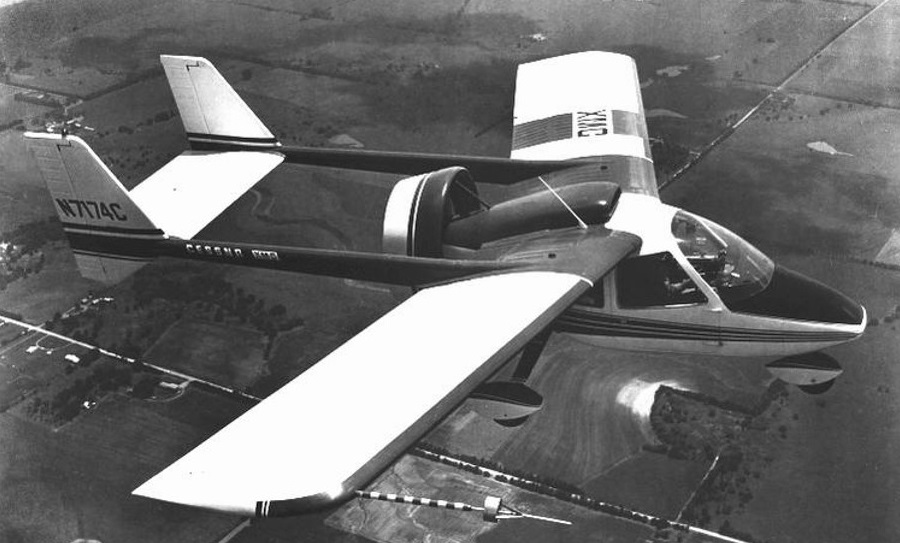
The XMC project ended in 1972. The aircraft configuration proved to have higher cabin noise levels than the production Cessna 150 and offered no performance advantages over the older design.
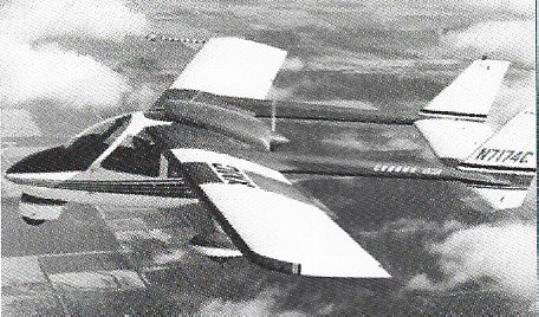
Cessna XMC prototype
Powerplant: 1 × Continental O-200, 100 hp (75 kW)
Wingspan: 32 ft 0 in (9.75 m)
Length: 23 ft 0 in (7.01 m)
Seats: 2
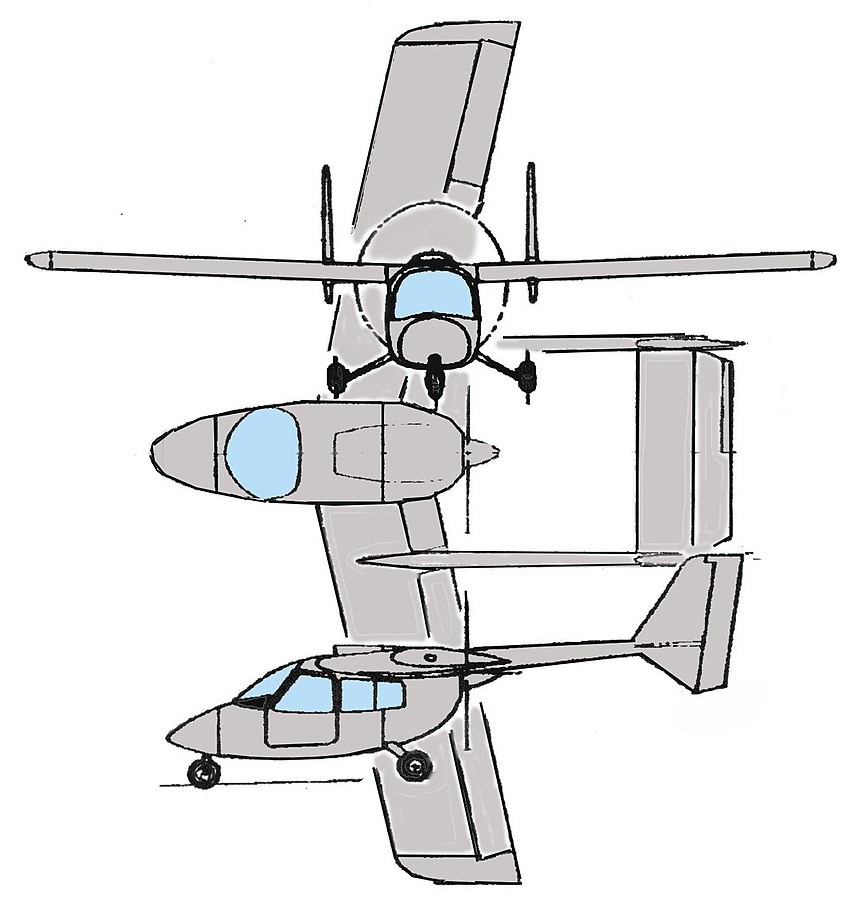
 All Aero