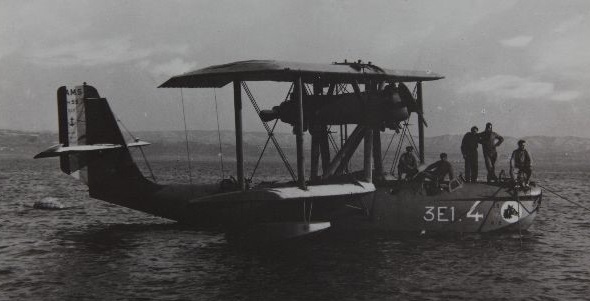
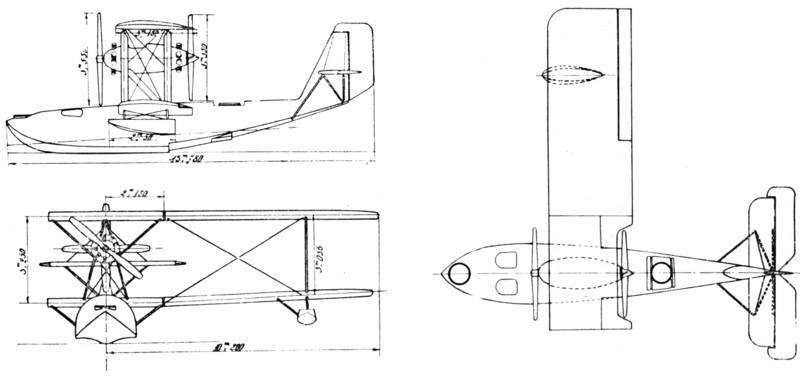
The CAMS 51 was a transport flying boat built in France in the mid-1920s. Designed by Maurice Hurel as a private venture by Chantiers Aéro-Maritimes de la Seine (CAMS), it was a conventional biplane with two radial engines mounted in a tractor-pusher installation in the interplane gap. The first flew in 1926.
One example (the 51C) was sold to Aéropostale, which used it for tests in preparation for transatlantic services.
CAMS also built a militarised version as the 51R3 in the hopes of interesting the French Navy in it as a reconnaissance aircraft, but no order was forthcoming.
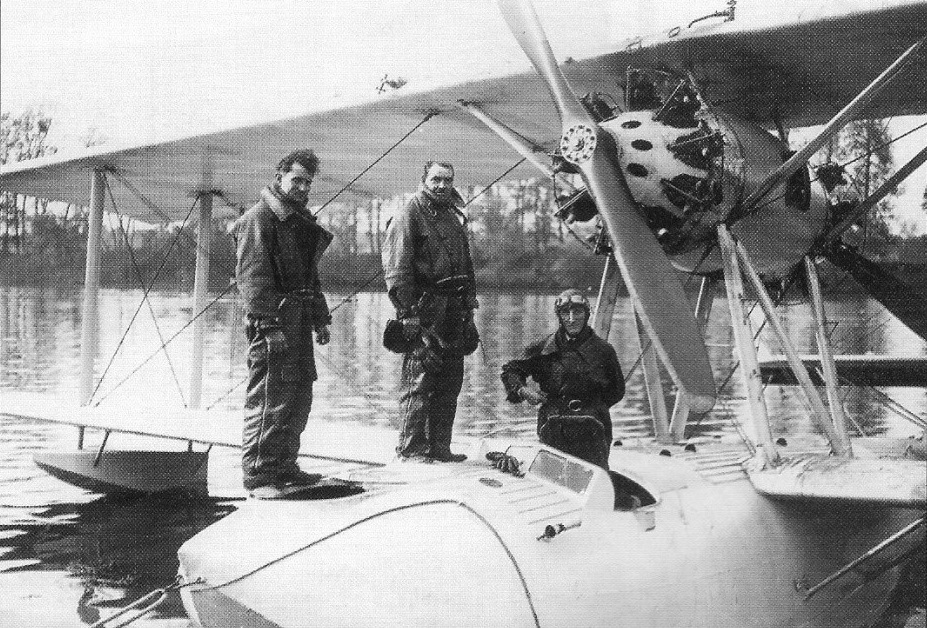
A final aircraft was built as a record-breaking machine originally designated 51-3 R that broke the world payload-to-altitude record on 18 August 1927 by lifting 2,000 kg to 4,684 m (15,368 ft). This aircraft was later used as a pathfinder for French airmail routes to South America.
CAMS 51C
Powerplant: 2 × Gnome et Rhône 9Aa, 283 kW (380 hp) each
Wingspan: 20.40 m (66 ft 11 in)
Wing area: 115.0 m2 (1,237 sq ft)
Length: 13.78 m (45 ft 2 in)
Height: 5.00 m (16 ft 5 in)
Empty weight: 3,150 kg (6,945 lb)
Gross weight: 5,150 kg (11,354 lb)
Maximum speed: 200 km/h (125 mph, 109 kn)
Range: 100 km (620 mi, 540 nmi)
Service ceiling: 4,600 m (15,100 ft)
Crew: two
Capacity: four passengers
 All Aero