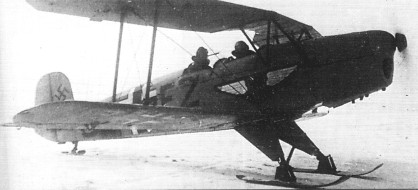
Bücker Flugzeugbau first design, designed by Anders Andersson, was the Bü.131A Jungmann powered by a 4 cylinder Hirth in line engine. A light two-seat biplane trainer specially developed for school and other training purposes, the prototype “D-3150” flew first 27 April 1934 with a 60-kW (80-hp) Hirth HM 6CR inline engine. The Jungmann was ordered by the Deutsche Luftsport Verband (The German Air-Sports Association). In 1936, the Luftwaffe adopted the Jungmann as one of its primary trainers.
Bucker Bu-131 Jungmann Article
Power was provided by a 60kW Hirth H.M.60R engine in the Bü.131A and a 78kW Hirth H.M.504A inverted engine in the Bü.131B.
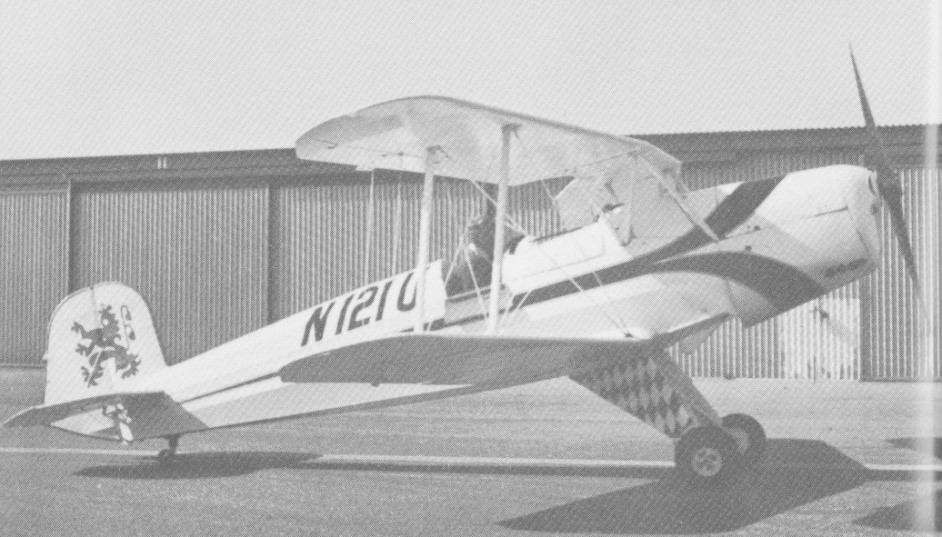
Before the outbreak of World War II the trainer was being used in 21 countries and licence-built in Holland, Czechoslovakia, Spain and Switzerland.
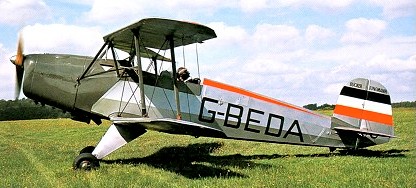
Spain was one of the earliest customers. Over a hundred German-built Jungmanns were delivered to the Spanish Nationalist side in the civil war. A total of 500 Jungmanns were built by the Construcciones Aeronauticas S.A. (CASA) in Spain. The first 200 had German Hirth HM504 engines but the remainder were powered by versions of the Spanish ENMA Tigre G-IV. In Spain production started 1938 and the CASA I-131 remained in production until the end of the fifties. The CASA E3B is a licence-built example.
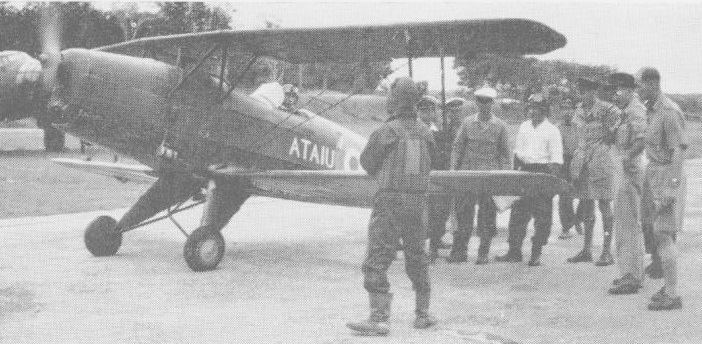
Some 1,254+ were built in Japan by Watanabe and Kyushu as the army’s Kokusai Ki-86A (1,037) and the navy’s K9W1 Momiji (Maple) (217+). Later models had 110 hp Hitahi Ha.47 engines. The code name was Cypress, applied to both the Navy Type 2 Momiji and Army Type 4.
The prototype was originally delivered to Japan in 1939, and Navy production began in August 1941.
Production figures have not survived, but some indication of scale is provided by the fact that Hungary took 100 and Romania 150, while Switzerland built 75. The Bucker Bü.131B Jungmann was also built under license pre-war in Switzerland by Dornier, and Czechoslovakia as the Tatra T.131. In Czechoslovakia the post-war version of the Bu.131B was the C.4. The C.104 was as the C.4 but with a 105 hp Walter Minor 4-III engine.
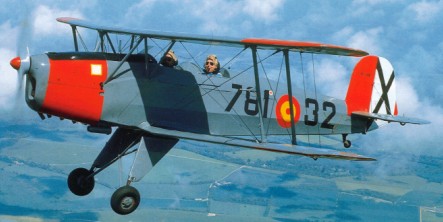
Bucker Prado Sl offered kits to build the former German Jungmann two-seat aerobatic biplane using original Bucker/CASA Bu 131 jigs, plus Jungmeister single-seat aerobatic biplane.
Bu 131A
Engine: 1 x Hirth HM60R, 59kW / 80 hp
Max Take-off weight: 630 kg / 1389 lb
Empty weight: 280 kg / 617 lb
Wingspan: 7.4 m / 24 ft 3 in
Length: 6.7 m / 21 ft 12 in
Height: 2.3 m / 7 ft 7 in
Wing area: 13.5 sq.m / 145.31 sq ft
Max. speed: 170 km/h / 106 mph
Cruise speed: 150 km/h / 93 mph
Ceiling: 3500 m / 11500 ft
Range w/max.fuel: 680 km / 423 miles
Crew: 2
Bu 131B
Engine: Hirth HM 504 A-2, 104 hp, 78kW
Wingspan: 24 ft 3.25 in / 7.4 m
Wing area: 145.314 sq.ft / 13.5 sq.m
Length: 21 ft 8in / 6.62 m
Height: 7.776 ft / 2.37 m
Max take-off weight: 1477.4 lb / 670.0 kg
Weight empty: 882.0 lb / 400.0 kg
Max. weight carried: 595.4 lb / 270.0 kg
Max. speed: 93 kts / 173 km/h / 114mph at sea level
Initial climb rate: 748.03 ft/min / 3.8 m/s
Service ceiling: 11483 ft / 3500 m
Wing load: 10.25 lb/sq.ft / 50.0kg/sq.m
Range: 216 nm / 400 km
Endurance: 3 h
Crew: 2
Ki-86
Engine: Hatsukaze, 110 hp
No built: 1037
K8W1
Tatra T-131
CASA Bu.131
Engine: Hirth HM504
CASA Bu.131
Engine: ENMA Tigre G-IV
C.4
C.104
Engine: Walter Minor 4-III, 105 hp

 All Aero