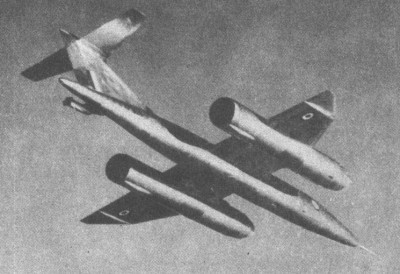
The Bristol 188 was designed to research structures for sustained supersonic flight, particularly in support of the Avro 730 reconnaissance aircraft. This required the aircraft to ‘soak’ at Mach 2.6 for at least 30 minutes.
The Bristol Type 188 research aircraft XF962 was built for high speed research. Two examples were built, constructed mainly of stainless steel and highly polished natural metal finish. Powered by two de Havilland Gyron Junior turbojets, the type first flew on 29 April 1963 and subsequently attained Mach 1.88 at 36,000 ft. However, the 188 had an extremely high fuel consumption and was only able to remain airborne for about 25 minutes.
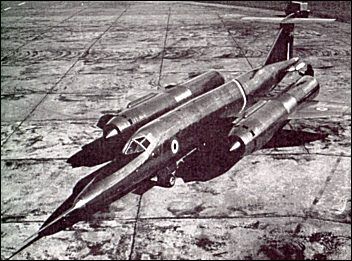
Take-off speed was nearly 483km/h, but in all other respects the 188’s speed was slower than desired, being able to achieve Mach 2.0 for only a couple of minutes. The whole project cost a huge GBP20 million and failed to achieve its objectives. It was wound down rather than develop the engines further. Test pilot Godfrey Auty was voted the ‘man most likely to eject in the coming year’ by his peers but never had to.
In 1964 the B.188 was indefinitely grounded, less than two-years after the first of two flew. A third never reached flight. The most expensive research aircraft built in Britain, the B.188 which a list of projects up to Mach 3 was to be flying for 12 to 15 years. For some time, one plane was cannibalised to support another.
B.188
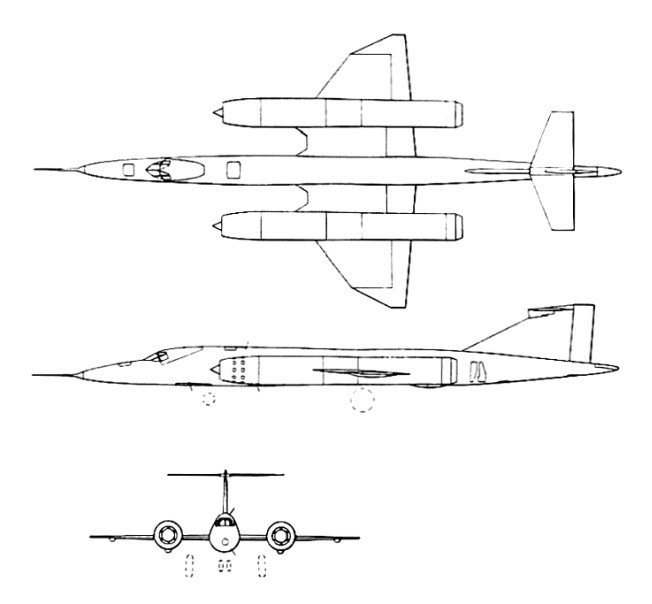
Engines: 2 x de Havilland Gyron Junior DGJ.10R turbojets, 6350kg
Wingspan: 10.69 m / 35 ft 1 in
Length: 21.64 m / 70 ft 12 in
Height: 4.06 m / 13 ft 4 in
Wing area: 36.79 sq.m / 396.00 sq ft
Max. speed: 1932 km/h / 1201 mph
Crew: 1
 All Aero