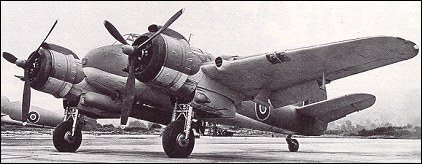
The Beaufighter was original proposed by the Bristol company and sold to the Royal Air Force to fulfill a need it required (though the RAF never officially approached the Bristol company about design any such aircraft).
Bristol B.156 Beaufighter Article
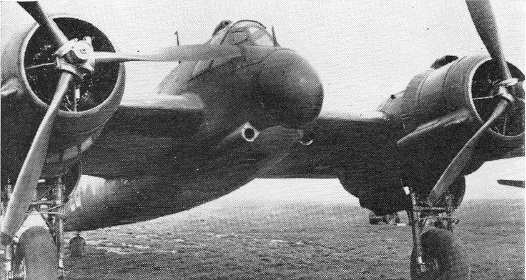
The first of four radar-equipped night fighter prototypes flew on 17 July 1939 and the first production Beaufighters were delivered to the Royal Air Force in the following April. The type was the first high performance night fighter equipped with airborne interception radar and successfully operated against the German night raids in the winter of 1940-1941. The twin-engine fighter utilized a crew of two men and was initially fitted with 4 x 20mm cannon and 6 x 7.7mm machine guns. Since the Beaufighter utilized many components of the already-in-production Beaufort torpedo plane, the implementation of the Beaufighter was quick. The Type 156 was based on the wings, tail unit, and landing gear of the Beaufort torpedo bomber with a new fuselage and Hercules radial engines. Production of the Beaufighter was launched on three lines.
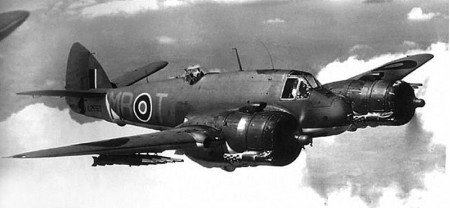
The first night fighter success with AI.Mk IV radar followed in November 1940.
The Beaufighter Mk IIF (597 night fighters) had a dihedralled tailplane to avoid directional instability and 1,280-hp/954-kW Rolls-Royce Merlin XX inline engines to avoid overtaxing Hercules production.
Later the Beaufighter was introduced into Coastal Command as a strike fighter. Its original gun armament was retained but rockets and torpedoes were added giving it an even greater fire power.
Not only did the Beaufighter operate in North West Europe but also the Middle and Far East. For operations in the Mediterranean theatre, some Beaufighter Mk IFs were tropicalized and fitted with additional fuel tankage.
The USAF utilized the Bristol Beaufighter platform for a time as their primary nightfighter until an American-made alternative could be produced.
A total of 5564 aircraft were built in England and 364 built in Australia, by the time the last UK built one was delivered in September 1945 and fifty-two operational Royal Air Force squadrons had been equipped with the type. The last Australian Mk.21 (first flown 26 May 1944) delivery was in December 1946
Of the 5562 built when production ended in September 1945, 2231 were Beaufighter Mk.10s and many were converted to target tug duties. Modifications included removal of most of the combat equipment, the installation of a target towing winch on the starboard side of the fuselage, together with a seat for the winch operator.
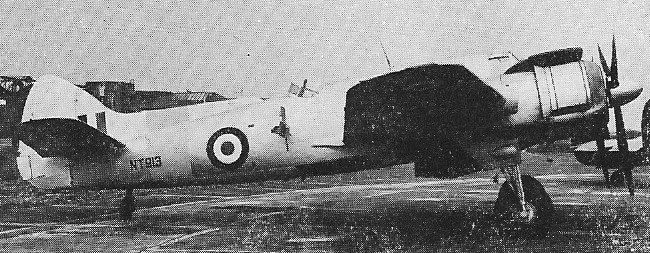
The last flight of the type in Royal Air Force service took place on 17 May 1960 when a TT10 made a final target towing flight from Seletar.
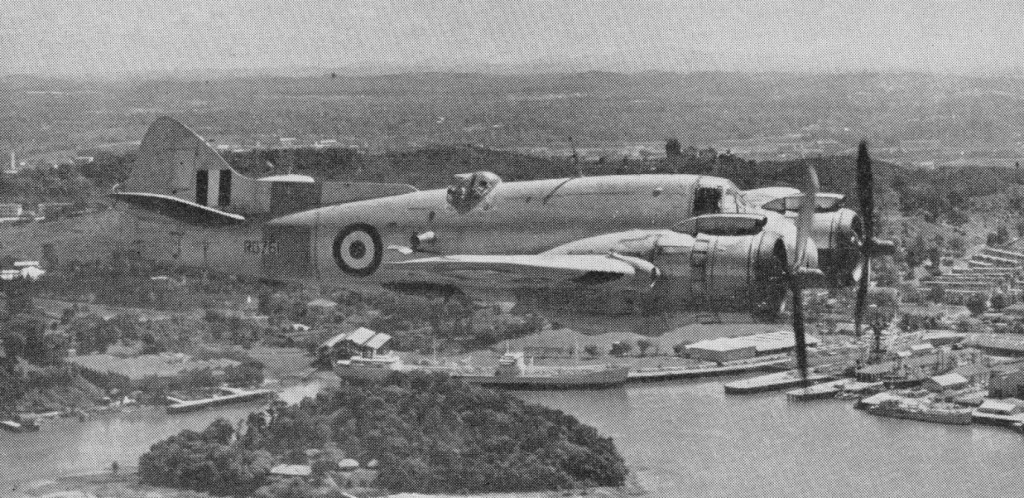
Bristol Beaufighter Restorations Article
Beaufighter Mk IF
553 night fighters
Beaufighter Mk IC
397 Coastal Command strike fighters
Beaufighter Mk IF
two-seat night fighter.
Engines: two 1,590-hp (1,186-kW) Bristol Hercules VI radial
Maximum speed: 306 mph (492 km/h) at sea level
Initial climb rate: 1,850 ft (564 m) per minute
Service ceiling: 28,900 ft (8,810 m)
Range: 1,500 miles (2,414 km)
Weights empty: 14,069 lb (6,381 kg)
Maximum take-off: 21,100 lb (9,526 kg)
Wing span: 57 ft 10 in (17.63 m)
Length: 41 ft 4 in (12.60 m)
Height: 15 ft 10 in (4.82 m)
Wing area: 503.0 sq ft (46.73 sq.m)
Armament: four 20-mm cannon and six 0.303-in (7.7-mm) machine guns.
Beaufighter Mk IIF
597 night fighters
Engines: 2 x 1,280-hp/954-kW Rolls-Royce Merlin XX
Wingspan: 57 ft 10 in / 17.63 m
Length: 42 ft 9 in
Height: 15 ft 10 in / 4.84 m
Empty weight: 13,800 lb
Seats: 2
Beaufighter VI
Wingspan: 57 ft 10 in / 17.63 m
Length: 42 ft 9 in
Height: 15 ft 10 in / 4.84 m
Empty weight: 14,900 lb
Bristol Beaufighter VIF
Length: 41.34ft (12.6m)
Width: 57.91ft (17.65m)
Height: 15.88ft (4.84m)
Maximum Speed: 333mph (536kmh; 289kts)
Maximum Range: 1,479miles (2,381km)
Rate-of-Climb: 1,923ft/min (586m/min)
Service Ceiling: 26,519ft (8,083m; 5.0miles)
Armament:
4 x 20mm cannons in under nose position
6 x 7.62mm machine guns in wings
Accommodation: 2
Hardpoints: 2
Empty Weight: 14,619lbs (6,631kg)
Maximum Take-Off Weight: 21,627lbs (9,810kg)
Engines: 2 x Bristol Hercules VI 14-cylinder air-cooled sleeve radials, 1,635hp.
Beaufighter IX
Wingspan: 57 ft 10 in / 17.63 m
Length: 42 ft 9 in
Height: 15 ft 10 in / 4.84 m
Empty weight: 14,900 lb
Bristol Beaufighter TF. Mk X
Engines: 2 x Bristol Hercules XVII, 1320kW / 1770 hp
Props: 3 blade
Take-off weight: 11431 kg / 25201 lb
Empty weight: 7076 kg / 15600 lb
Wingspan: 17.63 m / 57 ft 10 in
Length: 12.7 m / 41 ft 8 in
Height: 4.83 m / 15 ft 10 in
Wing area: 46.73 sq.m / 503.00 sq ft
Max. speed: 488 km/h / 303 mph
Cruise speed: 217 kts / 401 km/h / 249 mph
Service ceiling: 26,500 ft / 8077 m
ROC: 1850 fpm / 564 m/min
Range: 2366 km / 1470 miles
Range w/extra wing tanks: 1750 miles
Crew: 2
Armament: 2 x 20mm Hispano cannons, 7 x Vickers 0.303 / 7.7mm machine-guns
Bombload: 1 torpedo and 2 x 113kg bombs
Beaufighter TT.10
Engines: 2 x Bristol Hercules 18, 1770 hp
Wingspan: 57 ft 10 in
Length: 41 ft 4 in
Loaded weight: 21,250 lb
Max speed: 285 mph
Max cruise: 264 mph
Range at 15,000ft: 1960 mi
Range with target out: 1680 mi
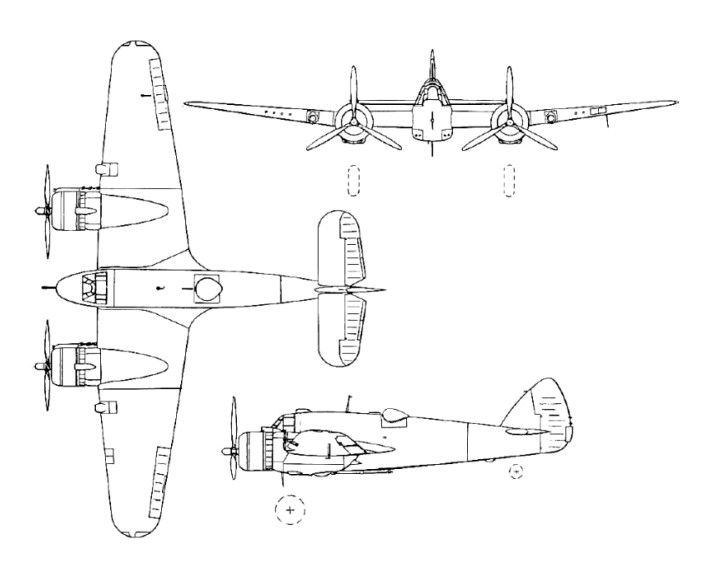
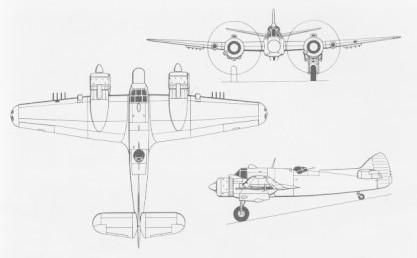
 All Aero