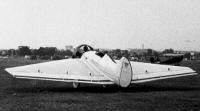
The BOK-5 or TsKB-13 (Russian: БОК-5 or ЦКБ-13) was designed by VA Chizhevski based on the Cheranovski BICH-7A of 1932. His initial idea was to develop a small single-engine aircraft with a flying wing scheme capable of improving the flight characteristics of the Cheranovski models. At the same time, this development would serve as a test bed for the conception of a twin-engine bomber with a similar scheme propelled by two M-34s.
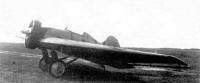
The BOK-5 was conceived as a low-wing monoplane with the vertical empennage located in the fuselage and propulsion propeller. Only in these features did it resemble the Cheranovski BICh-7A. The construction of the BOK-5 was fully metal with fabric coating. The entire fuselage, with an oval section, was built in aluminum and had a semi-monocoque structure.
The fuselage structure was made up of duralumin frames linked by cockpits. The first frame was conveniently reinforced to fix the engine support bench and behind it was located the fuel tank. The entire fuselage was covered with duralumin sheets.
In its central part was the cockpit with a front windshield. Just behind the cockpit was the empennage that ended in a spar to which the rudder was attached. In the lower part the tail skate was fixed.
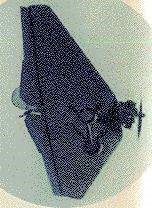
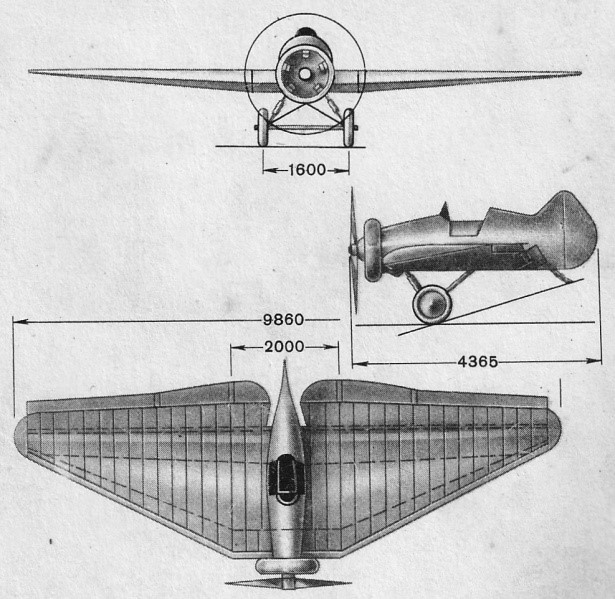
The BOK-5 wing had a trapezoidal and non-parabolic shape, with a 28º wing loosening at the leading edge and a straight trailing edge.
A distinctive feature of Chizhevski’s design was the conception of a wing with a relative thickness in the lower centroplane of only 15% and 13% towards the ends. The flight experience of the Cheranovski BICh-14 showed that the relative thickness of 22% generated a disruption of the airflow that was reflected in a worsening of the effectiveness of the rudder at low flight speeds.
To be able to make the landing, it was necessary to make the descent with great angles of the elevons and elevator rudders, which resulted in an increase in the landing speed.
The double spar wings featured TsAGI-890 profile. The centroplane was integrated into the fuselage. The wing spars cut through the fuselage. The bases of these stringers were made of steel tubes and the walls of duralumin slats. A third auxiliary spar made of duralumin but with a rectangular section was located in the tail section, at the fixing height of the wing movable elements.
Each wing console featured 6 reinforced ribs, constructed of duralumin tubing. Steel stringers were located between these ribs and the spars to reinforce the wing structure. In addition to the 6 reinforced ribs, the wing had 24 normal ribs. The wing and control surfaces were covered with fabric. The central part of the wing, at its junction with the fuselage, had a 0.5 mm thick corrugated duralumin sheet coating.
Along the entire wing span, behind the second spar, there was a movable surface that acted as a stabilizer. The structure of this mobile section was made up of duralumin frames and longitudinal beams. The coating was made of 0.5 mm thick duralumin sheets. At the rear edge were the fixings for the control surfaces.
With the help of an attachment, located on the left wall of the cockpit, the pilot could set positions of these surfaces in the range of -5º to + 3º, which allowed regulating the balance of the aircraft and therefore the force to be applied. at the controls. Ailerons and elevator rudders were attached to these surfaces. In the BOK-5 the aileron functions were performed only by the external surfaces. Pulling the joystick activated the ailerons and elevator in unison. Chizhevski concluded that by shifting the aircraft’s center of gravity back and using this control system he could achieve excellent stability, both in the longitudinal and lateral axis.
The control of the moving part of the wing, the elevator, the ailerons and the rudder were operated by cables. The tail skid was steerable and operated according to the direction of the rudder.
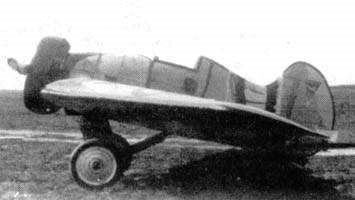
The BOK-5 was powered by an M-11 radial engine with the piston heads covered by an annular bonnet to decrease aerodynamic drag.
The landing gear was fixed, of the conventional type with tail skid. The main landers featured rubber shock absorbers. Attachments from a Po-2 Polikarpov were used in the construction of the landing gear. The wheels had dimensions 100 x 700 mm.
The structure of the plane was calculated to withstand 8 g, so the BOK-5 was capable of aerobatics.
The BOK-5 was painted in the colours of the “Firebird” (Zhar-ptitsa): a combination of green, red and blue bands. The annular bonnet was painted silver, the propeller red, the engine cylinders and the landers black. The triangular BOK logo was located on the empennage, also painted with stripes.
The construction work of the BOK-5 began in 1934 and Chizhevski used all the experience gained during the flights of the Cheranovski models. Construction was carried out at Factory No.35 in Smolensk.
The factory tests were carried out in 1937 in conjunction with the state tests in the NII VVS. At the beginning they were declared unsatisfactory. During takeoff, the aircraft had a marked tendency to deviate to one side, preventing takeoff. This problem was quickly solved by modifying the tail skid to an adjustable configuration. After this modification, the aircraft was returned for testing.
In September 1937 the test pilot of the NII VVS I. Petrov made the first flight. The BOK-5 was also flown by pilots P. Fedrovi, P. Stefanovski, M. Nyuxtikov in a total of 65 flights with a total duration of 20 hours and 42 minutes. They all concluded that this model behaved positively in all flight regimes, did not have a tendency to slow down and its handling did not differ much from other traditional aircraft. The BOK-5 was considered in the report to be affordable to low- and mid-time pilots.
The negative aspect reflected the desire of the pilots to increase the effectiveness of the rudder and achieve a better amortization system for the landing gear.
Initially, there was a strong engine vibration which prevented the tests from being carried out effectively, but this problem was soon solved.
In 1938 Chizhevski presented the military with an improved version of the BOK-5. This version had somewhat larger dimensions and a certain angle of inclination of the fuselage during takeoff operations.
The surface of the ailerons was decreased to achieve better control coordination and the surface of the rudder, on the contrary, was increased. As a result of the modifications, the weight of the aircraft increased by 32 kg.
In August 1938, during the aerial demonstration in Túshino, the BOK-5 made three flights.
The subsequent state assessments on the NII VVS were rated as successful. The report concluded:
“ The BOK-5 tailless plane is easy to pilot, presents good stability and maneuverability at speeds up to 150 km / h and allows the execution of high-school piloting figures. “
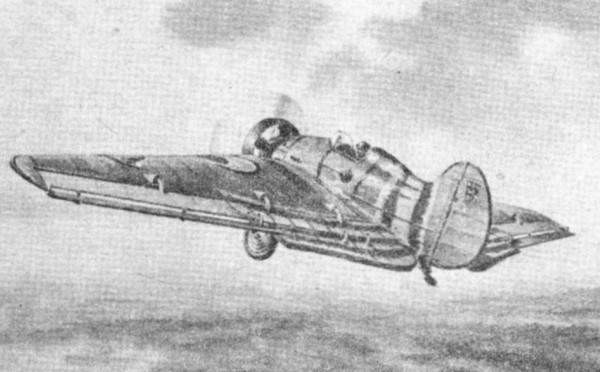
The evaluation of the characteristics of the BOK-5 during the piloting maneuvers is described in the memoirs of P. Stefanovski, who was very impressed by the results obtained during the first flight of execution tests of these figures.
After completing the tests in September 1938, the management of the NII VVS recommended to the Narkomat of the Defense Industry requesting Chizhevski to develop the BOK-6 twin – engine bomber with the same conceptual scheme. The development of this model was stopped due to the arrest of Chizhevski in early 1939 under the accusation of “enemy of the people.” After this all work on the BOK-5 was suspended.
БОК-5
Engine: 1 x М-11 100 hp
Wingspan: 9.86 m
Wing area: 23.15 m²
Length: 4.37 m
Height: 2.00 m
Elevator and aileron surface area: 4.3 m²
Empty weight: 596 kg
Normal takeoff weight: 764 kg
Wing loading: 33 kg / m²
Power load: 7.6kg / hp
Fuel capacity: 90 kg
Payload: 168 kg
Maximum speed at sea level: 155 km / h
Maximum speed at altitude: 174 km / h
Landing speed: 85 km / h
ROC: 2 m / s
Range: 600 km
Ceiling: 4850 m
Endurance: 4 hours
Take-off run: 120 m
Landing run: 200 m
Seats: 1
 All Aero