
Designed to a US requirement for a four-engine bomber capable of long distance travel with a full 2,000lb bombload and reach speeds between 200 and 250 miles per hour. The result was the Boeing Model 229 which first flew in 1934, though was later lost to pilot error. Nevertheless, the US Army Air Corps pursued the design with an order for further developmental models fitted with differing powerplants. Early B-17 models were mostly developmental production variants that included the additions of seal-sealing fuel tanks, better armor protection and a redesigned tail.
America’s USAAC had been a little ahead of Britain in specifying their need for a four engined bomber, and the prototype Boeing Model 299 / XB 17 designed to meet this requirement flew for the first time on 28 July 1935. Powered by four 750 hp Pratt & Whitney Hornet engines, the prototype crashed three months later at Wright Field when the control locks were inadvertently left engaged before takeoff.
A pre production batch of 13 Y1B 17s was bought for evaluation.
It was not until 1938 that the USAAC was able to place an order for 39 production B-17B, the last of this batch entering service in March 1940. These were the first B-17 production aircraft to be equipped with turbocharged Wright Cyclone engines, providing a higher maximum speed and much increased service ceiling.
Of the B-17C which followed, a batch of 20 were supplied to the RAF (designated Fortress I) and used operationally in Europe for evaluation, leading to improved B-17D and B-17E aircraft with self-sealing fuel tanks and revised armour and armament.
The Royal Air Force used them to bomb the German naval base at Wilhelmshaven on July 8th, 1941, marking the B 17’s first hostile action.
In late Summer of 1941, Great Britain bought 20 of the B-17C bombers recently produced by the USA, but the RAF had nothing but bad experiences with them. The B-17C’s first war deployment was on Monday 8 September 1941, when they attacked several targets along the Norwegian coast from from close to 20,000ft / 9000m. But the Germans received radar warning of their presence and sent out Me 109s from 77 Sqn, 13th Fighter Wing (based on Stavanger), which shot down 2 Fortress Is and seriously damaged three. After other fiascos with the B-17C, British Bomber Command concluded that they were completely unsafe, ineffective and unsuitable for use in any serious missions.
Following an extensive redesign, to increase armour and armament, new versions were introduced and were widely used by the Americans, both in Europe and the Pacific.

The initial definitive Flying Fortress model would arrive with 512 examples of the B-17E model which were the first to incorporated the twin .50 caliber tail armament for defense.
Many changes were made as a result of combat experience first by the RAF and then by the USAAF in Europe. Even the B 17E , armed with one 7.62mm and 12 12.7mm machine-guns for defence and able to carry a maximum 7,983kg of bombs, was given a mauling by the Luftwaffe when it first ventured over Europe in daylight: but the Americans stood by their beliefs in the effectiveness of day bombing added still more guns, learned new tactics and eventually made possible the crushing round the clock bomber offensive. This model was followed by the similar B-17F models of which 3,405 were produced.
A further modification programme, this time to improve the bomber’s ability to repel air attacks from the front, produced the B17G with its twin-gun ‘chin’ turret which you can see clearly on this example.
Most extensively built variant was the B-17G (8,680), built by Douglas (2,395) and Lockheed Vega (2,250) as well as at the Boeing plant, Seattle (4,035). The B 17G model, the seventh variation of the original design, was equipped Pratt & Whitney R-1820-97 radial engines with super-chargers that allowed the airplane to cruise at 35,000 feet at a maximum speed of 285 miles per hour. It also carried up to thirteen .50 caliber machine guns and 6,000 pounds of bombs. The addition of a chin turret below the nose (containing two 12.7mm machine-guns) provided better defence against the head-on attacks. U.S.forces used it primarily for high level daylight bombing over Europe. The formidable machine gun placement enabled B 17s to develop a highly effective defensive tactical formation. Production of the B-17G started in July 1943.
Flying the Boeing B-17 Flying Fortress
B-17G manufactured after January 1944 were no longer given a camouflage coating because they were lighter and faster without it
The bombardier sat on a type of swiveling stool with a Norden Bombsight before him. The navigator sat off-set to his rear at a small map-filled desk. Both were supplied with defensive .50 caliber machine guns with the Bendix chin turret under the bombardiers control in the G model and onwards. Access to the nose was accomplished through a smallish passage way underneath the main flight deck.
The pilot and co-pilot sat on the flight deck above and behind the navigator’s position with the pilot to the left and his copilot to the right with both offered equal control access and views of all four of the engines. To their rear was the top gunners position with a catwalk crossing between the payload in the bomb bay. Once past the bomb bay, the radio operators station and his equipment was apparent. The radio operator was also afforded a table and seating along with his communications equipment. Access to the belly turret was available following this area, which further opened up to the staggered waist gunner positions which might or might not have been covered by plexiglass depending on the model.
On 1 July 1942 the first heavy bomber of the American 8th Army Air Force laned in Britain by the North Atlantic route. B-17E “Jarring Jenny” landed at Prestwick airfield, Scotland,
The B-17 flew the 8th Air Force’s first combat mission out of England in August 1942. At 3:20pm on Monday 17 August 1942, 12 B-17E of the 97th Bomber Group (US 8th Air Force) took off on their first mission over Europe, flying with four RAF Spitfire squadrons to provide them cover. US Brigadier General Ira Eaker flew with them, in the plane of the Group Commander, known as ‘Yankee Doodle’. The bombers target was Sotteville-les-Rouen on the left bank of the Seine, site of a railway switch yard crucial to the supplying of Le Harve. The Flying Fortresses released their 166 ton bombload from an altitude of over 22,000 ft. all the bombers returned to base.
The British were skeptical about daylight bombing, but the American strategy was made possible by the ruggedness built into high-flying bombers like the B-17 and by the deadly accuracy of the Norden bombsight. Used as the spearhead of the U.S. Army Air Force’s attacks in Europe, the aircraft also saw combat duty in all theaters of war. Three days after Pearl Harbor, the Japanese convoys en route to Luzon in the Philippines were met by Flying Fortresses.
They flew high in huge formations, protecting each other with cross fire, and dropped 640,036 tons of bombs in Europe for a loss of 4,750 aircraft.
Special variants included the B-40 with up to 30 machine-guns/cannons, which was intended as a B-17 escort, but proved to be an operational failure; BQ-7 pilotless aircraft packed with explosives to be deployed against German targets by radio control, which failed due to unreliable control equipment; CB-17 and C-108 transports; and F-9 long-range B-17 equipped to serve as an air-sea rescue aircraft and able to deploy a lifeboat carried beneath the fuselage.
The YB-40 escort fighter variant airframe and engines were typical B-17 but the armament was 31 guns. The largest was a 40mm faired into the radio hatch. In each waist position was a 20mm cannon plus two 0.5in machine guns. A four-gun turret was in the nose and another in the tail. The upper turret had four more 0.5in, the ball turret two. There were 10 more 0.5in machine guns in various locations.
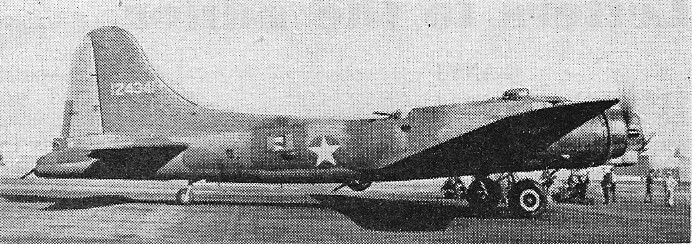
Boeing XB-40 Escort Fortress Article
At the height of production Boeing’s Seattle plant alone produced a completed aircraft every ninety minutes. A total of 12,731 built by Boeing, Douglas, and Lockheed Vega of which just over two-hundred were supplied to the RAF.
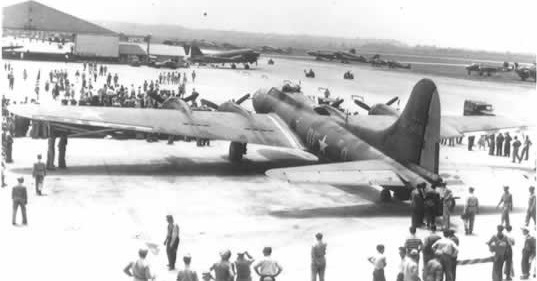
RAF forces took several B-17 models with their applied “Fortress 1”, “Fortress 2” and “Fortress 3” designations, utilizing some in the electronic countermeasures role. Reconnaissance variants appeared with the US Army Air Corps, US Navy and US Coast Guard as well, each with differing designations shown below.
The B-17 Flying Fortress accounted for over 290,000 sorties with 640,000 tons of ordnance dropped during World War Two.
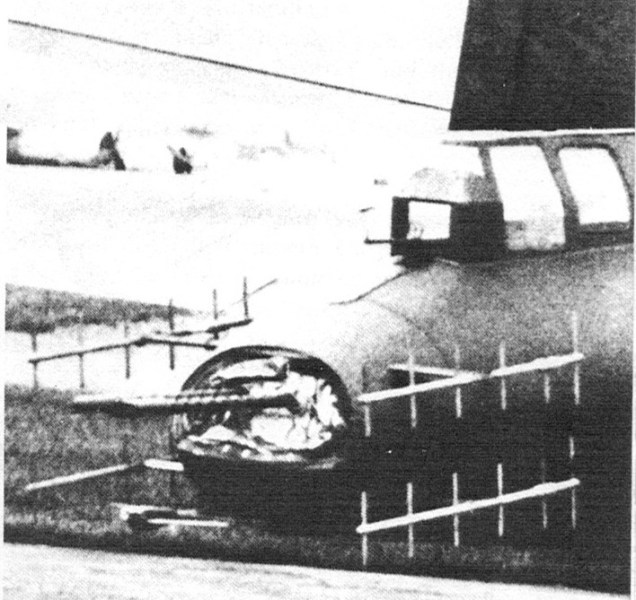
The German 200th Bomber Wing, KG200, carried out special transport missions using captured US B-24 Liberator and B-17 Flying Fortress which the Germans called by the code name Dornier Do 200.
Versions of the wartime Flying Fortress were still in service in 1955 include lhe U.S.A.F.’s QB-17G drone, SB-17 with an airborne lifeboat and CB-17G V.I.P. transport; and the U.S. Navy’s PB-1G air-sea rescue and PB-1W radar early-warning aircraft. All have four Wright R-1820-97 piston engines.


US Navy and Coast Guard rescue version are similar to the SB-17G is designated PB-1G.

In New Mexico in 1950, Project Cirrus involved seeding rain clouds with dry ice from a B-17.

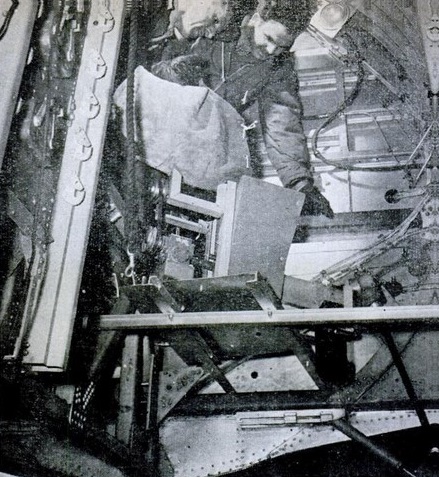

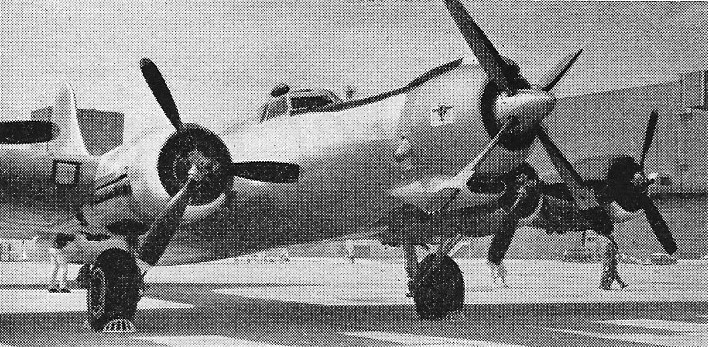
Replica:
Bally B-17
Allison Engines Testbed Gallery
XB-17
Engines: 4 x P&W Hornet, 750 hp
Wingspan: 103 ft 9 in
Length: 68 ft 9 in
Take-off weight: 43,000 lb
Bombload: 2570 lb
Loaded range: 2000 mi at 204 mph
STANDARD DATA:
Gross weight: 49,650 lb
Empty weight: 30,620 lb
Fuel capacity: 1,700 Usgals
Engines: four 1,200 hp Wright Cyclone radials.
Top speed: 323 mph
Cruise speed: 250 mph
Climb to 25,000 ft.: 41 min
Range: 3,400 nm
Ceiling: 37,000 ft.
B-17
Engines: 4 x Wright R 1820-97, 1,200 hp, 885kW
Length 73.9 ft. (22.5 m)
Height: 5.8 m / 19 ft 0 in
Wing span: 103 ft 8 in (31.6 m)
Wing area: 141.9 sq.m / 1527.40 sq ft
Weight empty 32,250 lb. (14,630 kg)
Max. bomb load: 9,600 lb (4,350 kg)
Max. Speed 317 mph (510 kph)
Cruise speed: 250 km/h / 155 mph
Range 2,000 miles (3,220 km) with 4,000 lb. of bombs
Ceiling: 10700 m / 35100 ft
Crew: 10
Armament: Up to thirteen 0.30 and 0.50 in. machine guns
B-17E
Engine: 4 x Wright R-1850-65 Cyclone, 1200 hp
Wing span: 103 ft 9 in (31.62 m)
Length: 73 ft 10 in (22.5 m)
Height: 19 ft 2 in (5.84 m)
Engines: 4 x Wright, 1200 hp
Max TO wt: 53,000 lb (24,040 kg)
Max level speed: 275 kts / 317 mph / 510 kph
Service ceiling: 36581 ft / 11150 m
Range: 2592 nm / 4800 km
Crew: 9
Armament: 13x MG 12,7mm, 7985 kg Bomb
B 17G
Engines: 4 x Wright Cyclone R-1820-97, 1,200 hp
Wing span: 103 ft. 9.5 in / 31.62m
Length: 74 ft. 9 in / 22.78m
Height: 19 ft. 1 in / 5.82m
Wing area: 1,420.0 sq ft / 131.92 sq.m
Loaded weight: 66,000 lb
Empty Weight: 36,136lbs (16,391kg)
Maximum Take-Off Weight: 72,003lbs (32,660kg)
Maximum Speed: 287mph / 462kmh; 249kts at 25,000 ft / 7,620 m
Cruise speed: 182 mph
Rate-of-Climb: 541ft/min (165m/min)
Climb to 20,000 ft / 6,095 m: 37 min 0 sec
Service Ceiling: 35,597ft (10,850m)
Armament: 13 x 0.5in Browning mg
Bombload: 8000 lb / 17,600 lb
Crew: 10
Range: 3,400 miles / 5,470 km
Range with 500lb load: 2100 miles / 3,220km
CB-17G
QB-17G Fortress
Engines: four Wright R-1820-97
Span: 103 ft. 9 in
Weight: 49,500 lb
Max Speed: 295 m.p.h.
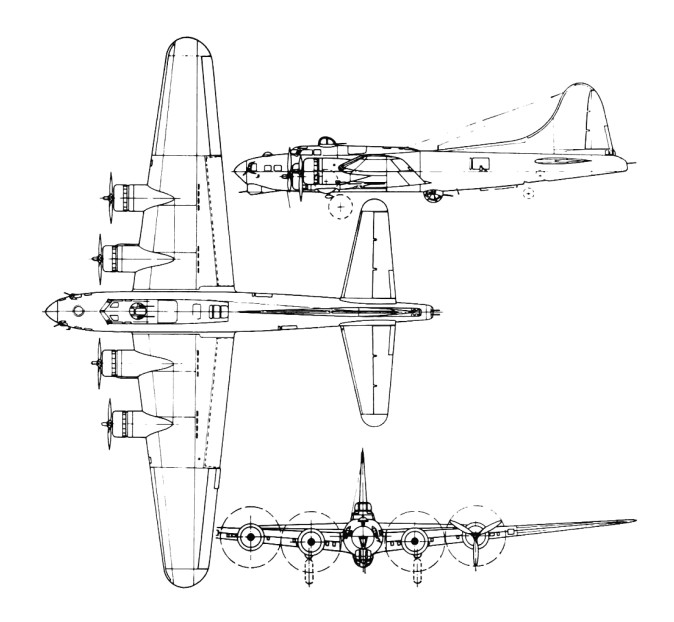
 All Aero