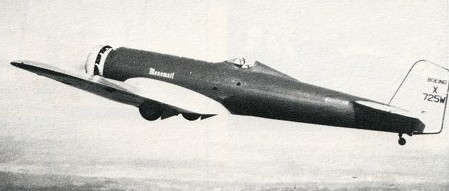
Boeing began the development of an advanced cargo/mail-carrying aircraft in 1929.
Boeing 200 / 221 Monomail Article
A cantilever low-wing monoplane of all-metal construction, the Boeing Model 200 Monomail benefited by the cantilever wing eliminating drag-inducing struts and bracing wires. The a semi-monocoque fuselage structure provided a more streamlined shape, the semi-retractable tailwheel landing gear ensured that most of the main unit structure was retracted within the wing, and the Pratt & Whitney Hornet B radial engine was surrounded by an anti-drag cowling. It retained an open cockpit for the pilot, seated well aft, and the forward cargo/ mail compartments.
First flown on 6 May 1930, the Monomail was used for a number of tests and experimental flights before entering service on Boeing Air Transport’s San Francisco – Chicago route in July 1931. The aircraft did not achieve a single order beyond the prototype.
Generally similar to the Model 200 Monomail, this single aircraft had a fuselage lengthened by 0.2m and cargo/mail capacity reduced from 1043kg to 340kg, to provide accommodation for six passengers in an enclosed cabin; first flown on August 1930, and entered service with Boeing Air Transport
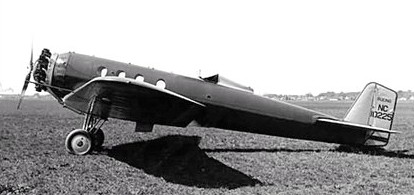
Boeing Model 221A: designation applied to the Models 200 and 221 following fuselage ‘stretches’ to provide accommodation for eight passengers; both saw service on the Cheyenne-Chicago route of Boeing’s newly-formed United Air Lines
The advanced design of this aircraft led to development of the Model 214 and Model 215 experimental bombers, and two variants of this basic civil design.
Boeing Model 200
Engine: 1 x 429kW Pratt & Whitney Hornet B radial
Take-Off Weight: 3629 kg / 8001 lb
Empty Weight: 2158 kg / 4758 lb
Wingspan: 18.02 m / 59 ft 1 in
Length: 12.56 m / 41 ft 2 in
Max. Speed: 254 km/h / 158 mph
Cruise Speed: 217 km/h / 135 mph
Ceiling: 4265 m / 14000 ft
Range: 853 km / 530 miles
 All Aero