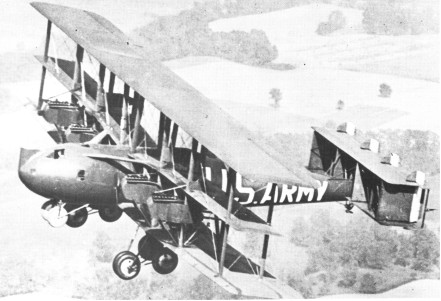
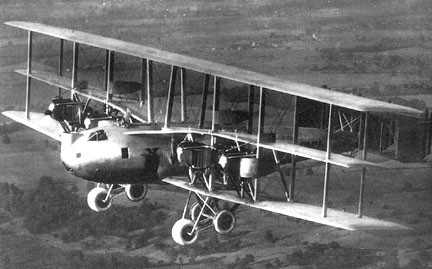
Designer Walter Barling went to America, where General ‘Billy’ Mitchell provided him with a $375,000 contract, let by Engineering Division, McCook Field, to build a bomber capable of carrying a 2268-kg / 5000-lb bombload for 12 hours at 160 kph (100 mph). Not surprisingly the Barling NBL-1 bore a strong resemblance to the Tarrant Tabor, though its triplane wings spanned 3.35 m (11 ft) less and its six 12-cylinder Liberty engines were all mounted on the same level, between the lower and middle wings. On 22 August 1923 from Wilbur Wright Field at Dayton, Ohio, whence it had been railroaded from the Witteman-Lewis Aircraft Company’s works in New Jersey where it was constructed.
As AS64215, Barling was aboard for that 20-minute maiden flight and later that year the Barling bomber flew to the Inter¬national Air Race at St Louis with Major General Mason Patrick, chief of the Army Air Service, as a passenger. It later carried a 2000-kg (4408-lb) load up to 2,050 m (6722 ft).
But with Billy Mitchell’s proposed bomb load the burly Barling could not top 160 kph (100 mph) and had a range of 275 km (170 miles) rather than the 1930 km (1200 miles) the general wanted. It flew around (slowly) for years, appearing as a curiosity at airshows, and was eventually broken up in 1928, save for its ten huge undercarriage wheels which are preserved at Wright-Patterson Air Force base from where the triplane made its first flight.
 All Aero