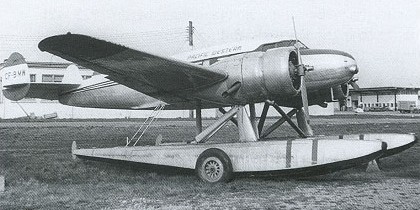
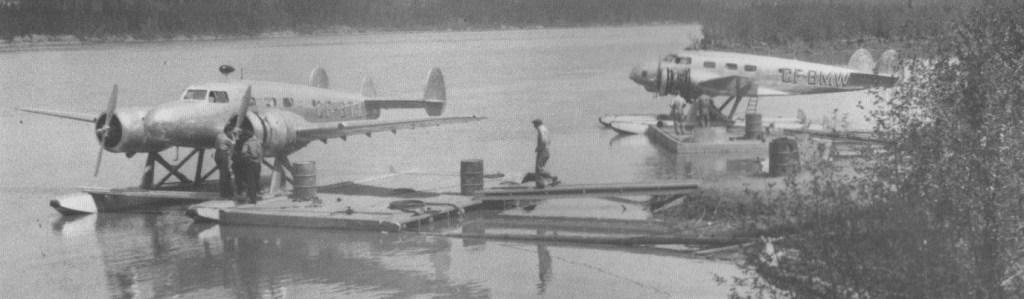
This aircraft was built in a small hanger at the Detroit City Airport, Michign, and operated in the Canadian north into the sixties. It was a flexable aircraft for the bush as it could operate on wheels, skis or floats. The pictured plane was Canadian registered and operated by Pacific Western Airlines.
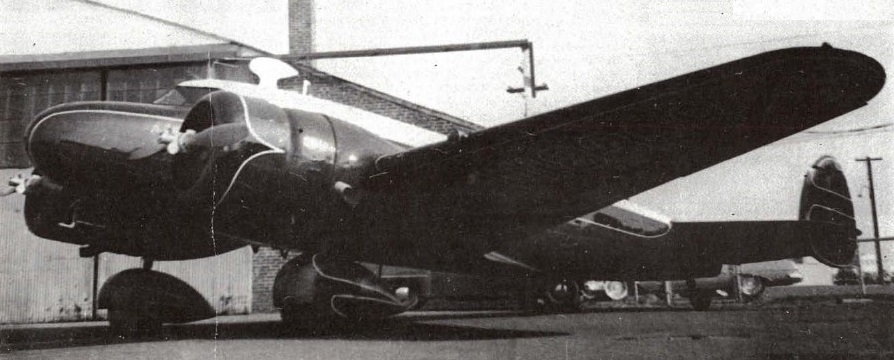
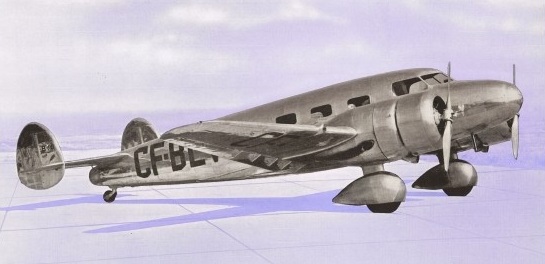
The design incorporated a multispar stressed-skin wing with two X-spars patented by A. S. Barkley (US patent #2,122,709 to Barkley in 1938) that eliminated the need for ribs or bulkheads in the wing.
The initial example made its first flight in April 1937, piloted by Frank Cordova.
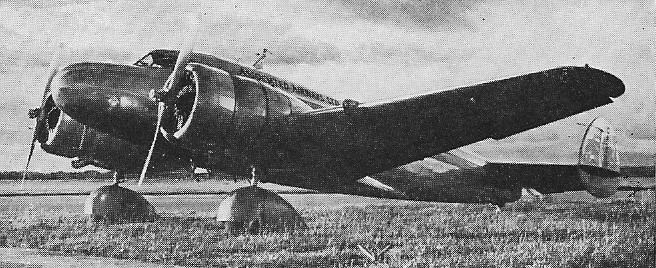
After a series of demonstration flights, the prototype went to Canada where it was registered CF-BVE.
Canadian Car & Foundry obtained the world-wide distributing rights for all but the United States.
Only 11 T8P-1s were constructed. Canadian Car demonstrated the aircraft to the Department of Defence but apart from selling only one aircraft to the RCAF, no government orders were obtained. The RCAF preferred the Beech 18.
Receiving ATC 662 and priced at $37,500, those built include prototype NX18388=CF-BVE=NC18388, NC18470, NX26400=CF-BQM, NC26496=CF-BTX, YRAHA=OB-GGK, CF-BLV, CF-BMG, CF-BMV, CF-BMW, some on twin EDO floats.
As a robust aircraft, three T8P-1 survived into the late 1960s.
Through the purchase of Yukon Southen Air Transport, Mackenzie Air Service and Prairie Airways, CPAL acquired a total of six Barkley-Grows.
The prototype aircraft, CF-BVE, was sold in 1945 and BMG and BTX were written off. CF-BLV, BMV, BMW and BQM served until late 1949/early 1950 when replaced by more modern aircraft.
CF-BQM was being restored at the Aeo Space Museum in Calgary, Canada.
T8P-1
Engine: Pratt & Whitney Junior, 400 hp
Wingspan: 50 ft 8 in
Length: 36 ft 2 in
Height: 9 ft 7.5 in
Empty weight: 5880 lb
Loaded weight: 8750 lb
Max speed: 220 mph at 5000 ft
Cruise: 185 mph at 10,000 ft
ROC: 1400 fpm
Cruise range: 1000 mi
Crew: 2
Passengers: 8
 All Aero