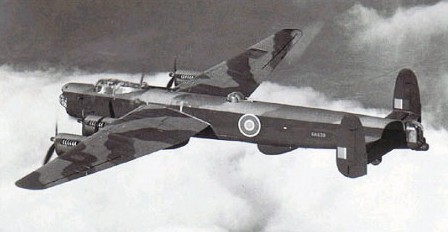
Originally known as the Lancaster Mk.IV, the Avro 694 Lincoln had a slightly longer fuselage, extended-span wings, a revised nose, better defensive firepower and the two-stage Merlins previously used in the high¬speed Lancaster Mk VI.
The Lincoln conformed to Specification B.14/43 and the first prototype flew on 9 June 1944.
Normally powered by four Rolls-Royce Merlin 85 engines with annular radiators, the Lincoln was armed with twin 12.7mm Browning machine-guns in a Boulton-Paul Type F nose turret; two 20mm Hispano Mk 4 or Mk 5 cannon in a Bristol B-17 Mk II dorsal turret; twin 12.7mm machine-guns in a Boulton Paul Type D rear turret and up to 6,350kg of bombs.

The war ended just as No. 57 Sqn, the first recipient, was equipping, and the Lincoln became the RAF’s standard post-war heavy bomber.
Avro built 168 production aircraft, plus 79 from Metropolitan-Vickers and 281 from Armstrong Whitworth. Six were also built in Canada and 54 with nose extensions in Australia by the Government Aircraft Factory at Fishermen’s Bend, NSW.
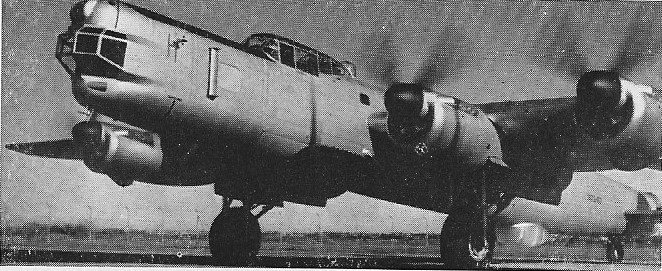
The Lincoln B.30 is an Australian-built version for the RAAF. The first five B .30s were assembled largely from imported British components, the first flying on 17 March 1946, but a further eighty-eight were completely built in Australia, a number being fitted with a lengthened nose to accommodate two additional crew members and search radar. This increases fuselage length by 6 ft. The B.30 has four Commonwealth-built Merlin 102 engines.
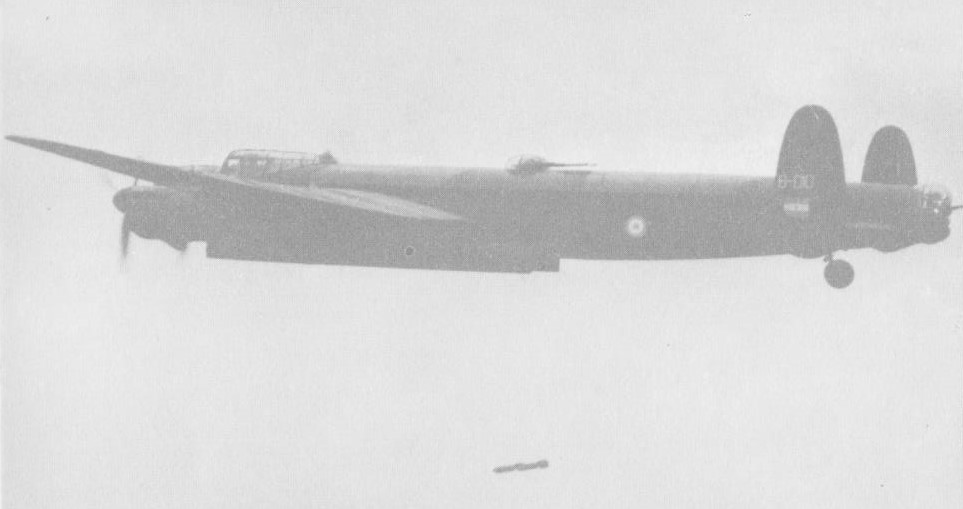
Thirty Lincolns were also diverted to the Argentine Air Force. Several versions of the bomber were produced during the production runs: Lincoln B.I with Merlin 85 engines; B.2 with Merlin 68A engines; Lincoln Mk 3 intended to be the ASR version but became the Shackleton; Lincoln B.4 with Merlin 85; Lincoln B.15 built in Canada; and Lincoln B.30 Australian version with Merlin 85 or 102 engines.
The bomber eventually equipped 20 RAF squadrons. No 97 Squadron and others were detached to Singapore in 1950 for anti-terrorist raids and to Kenya in 1954. One was converted for the bulk uplift of fuel oil and made 45 civil flights during the Berlin Airlift.
On 12 March 1953 at 14.30 hrs Soviet MiGs shot down an Avro Lincoln bomber training aircraft belonging to the RAF. According to the RAF the aircraft was within the bounds of the Hamburg-Berlin Air Corridor, just across the Soviet border, at a hight of 10,000 ft. The Soviet version of the incident stated that the Lincoln was beyond the boundaries and had penetrated 75 miles / 120 km into East Germany. Instructions to land given by the MiG fighters were replied to with machine-gun fire after which the Soviet fighters had opened fire.
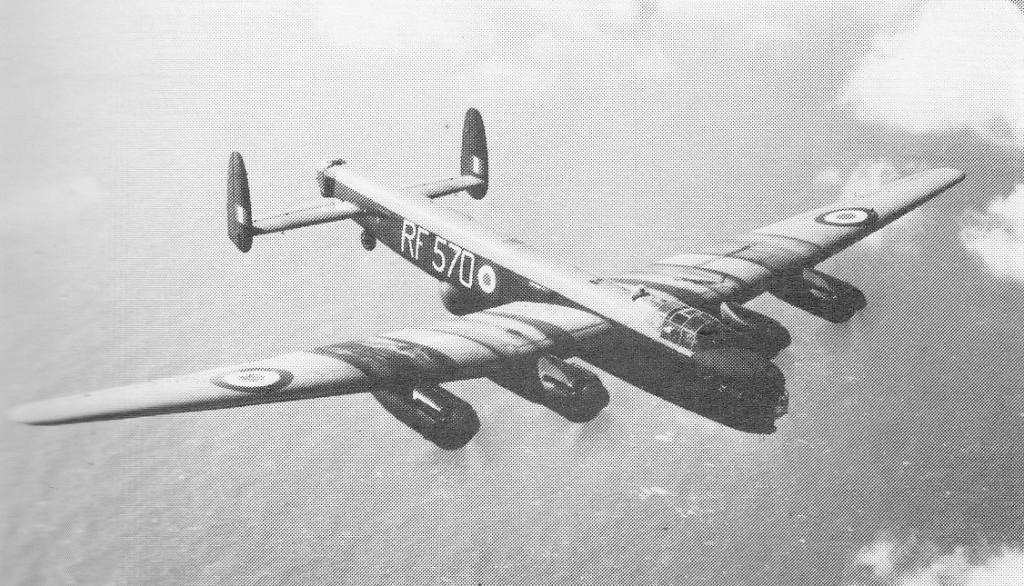
The RAF Lincoln crashed a short distance from the West German border and six out of the seven crew members lost their lives. According to London, the aircraft, which was based at the Central Gunnery School at Leconfield, carried no ammunition, as it was on a ‘routine training flight’. From British articles at the time it could be deduced that the Lincoln crew had purposely provoked an incident in order to disclose listening posts on the ground and to gauge the reactions by aircraft of the Soviet air defences. In those days special ELINT Lincolns of the RAF, belonging to No.192 Squadron and the Central Signals Establishment at Watton, Norfolk, gatered electronic information.
Before withdrawal in 1963 one detached flight operated in Aden.
The Lincoln proved to be last piston-engined bomber to serve with the RAF.
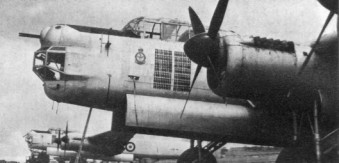
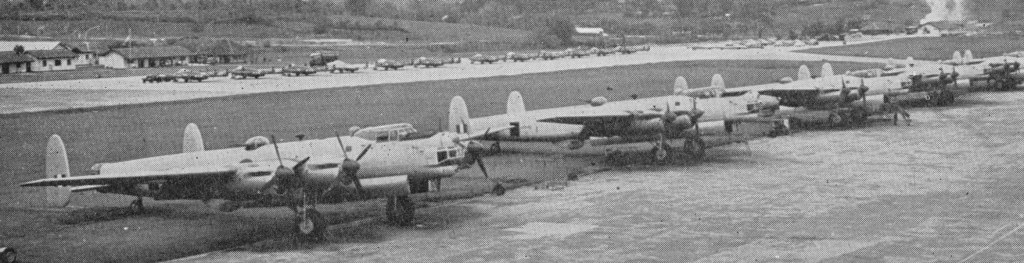
After seven years of operations in Malaya, the No1 Sqn RAAF returned to Australia in mid-1958, taking their Lincoln B.30s with them.
Lincoln
Engines: 4 x Rolls-Royce “Merlin 85”, 1305kW
Take-off weight: 34020 kg / 75002 lb
Empty weight: 19690 kg / 43409 lb
Wingspan: 36.58 m / 120 ft 0 in
Length: 23.86 m / 78 ft 3 in
Height: 5.27 m / 17 ft 3 in
Wing area: 132.01 sq.m / 1420.94 sq ft
Max. speed: 475 km/h / 295 mph
Cruise speed: 345 km/h / 214 mph
Range w/max.payload: 2366 km / 1470 miles
Armament: 6 x 12.7mm machine-guns, 6350kg of bombs
Crew: 7
Avro 694 Lincoln B Mk. I
Engine: 4 x Rolls Royce Merlin 85, 1756 hp (1305 kW)
Length: 78 ft 3.5 in / 23.86 m
Height: 17 ft 3.5 in / 5.27 m
Wingspan: 120 ft 0 in / 36.58 m
Wing area: 1420.956 sq.ft / 132.01 sq.m
Max take off weight: 75014.1 lb / 34020.0 kg
Weight empty: 36792.6 lb / 16686.0 kg
Fuel capacity: 2950 Imp.Gal
Max. speed: 256 kts / 475 km/h / 295 mph at 4570 m (15,000 ft)
Cruising speed: 187 kts / 346 km/h
Service ceiling: 30495 ft / 9295 m
Cruising altitude: 20013 ft / 6100 m
Wing load: 52.89 lb/sq.ft / 258.0 kg/sq.m
Range: 2546 nm / 4715 km
Range (max. weight): 1278 nm / 2366 km
Crew: 7
Armament: nose and tail turrets each with two 12.7 mm (0.5 in) guns, dorsal turret with two 12.7 mm (0.5 in) or two 20 mm guns, and occasionally also one 12.7 mm (0.5 in) ventral hand aimed gun; bombload up to 6350 kg (14,000 lb)
Lincoln B.30
Engines: four Commonwealth-built Merlin 102
Wingspan: 120 ft
Length: 84 ft 3.5 in
Height: 17 ft 3.6 in
Loaded weight: 82,000 lb
Max speed: 290 mph
Cruise: 230 mph
Range: 3500 mi
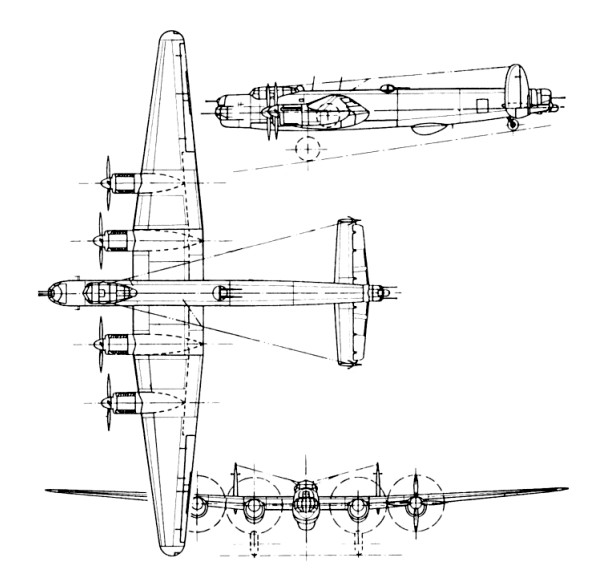
 All Aero