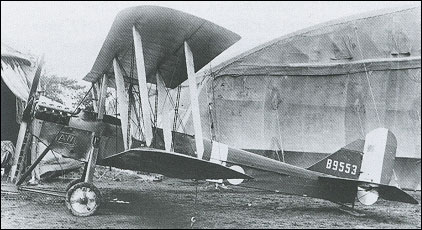
When W G Armstrong, Whitworth & Co received a contract in 1914 to build B.E.2 aircraft for the Royal Flying Corps and the Royal New Zealand Air Service, it offered to design and build a simpler but equally efficient two seat trainer aircraft instead. Similar in configuration to the B.E. in its initial state, with separated cockpits for pilot and observer, the Frederik Koolhoven designed F.K.3 construction started in August 1915.
Armstrong Whitworth F.K.3 Article
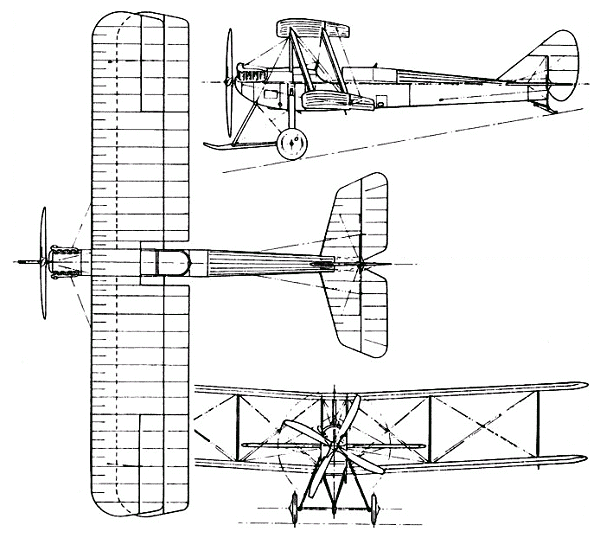
Production versions incorpo¬rated a tandem crew cockpit with the pilot seated forward and a more efficient tail design. The prototype F.K.3 had a 120 hp Austro Daimler engine, but most production models had the 90 hp RAF la, while a few had the 105 hp RAF lb.
Approximately 500 F.K.3s were ordered for RFC use, the bulk of which were allotted to training units where they gave service until the end of hostilities.
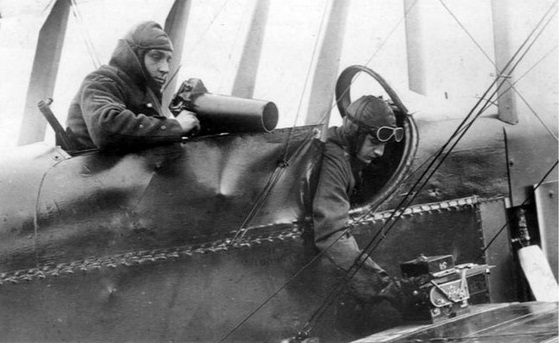
Only one RFC squadron used F.K.3s operationally; 47 Squadron in Macedonia, where they became a bomber and general reconnaissance machine from late 1916 until the Armistice. On October 31, 1918, the RAF had a total of 62 F.K.3s still on charge. At least four of these went onto the post 1918 Civil Register as G-¬EABY (ex 119629), G EABZ (ex-B9518), G EAEU (ex-B9612) and G EALK (ex-B9603).
Engine: RAF.1a, 90 hp or Beardmore, 120 hp
Span: 12.2 m (40 ft)
Length: 8.8 m (29 ft)
Height: 3.6 m (11 ft 10.75 in)
Empty weight: 762 kg / 1682 lb
Loaded weight: 932 kg / 2056 lb
Maximum speed: 142 km/h (88 mph) at 1980 m (6500 ft)
Service ceiling: 3962 m (13 000 ft)
 All Aero