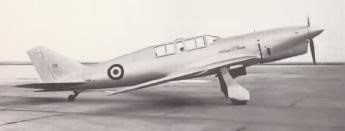
When SAI Ambrosini embarked on the creation of a light jet with supersonic capabilities, it was decided to proceed step by step, with experimentation.
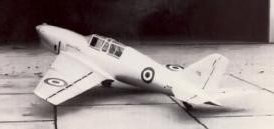
A standard Ambrosini S.7, named Freccia, was equipped with a 45° swept wing.
First flown on 18 July 1952 on the military base at Aviano, the pilot was Ireneo Di Crescenzo. Test were flown until 1 August 1952. After tests with the sweptback wing, designer Sergio Stefanutti designed the Sagittario (Archer) powered by a 400kg thrust Turbomeca Marbore turbojet.
The S.7 was produced in single- and two seat versions for the Italian Air Force. The two-seater being S.7B.
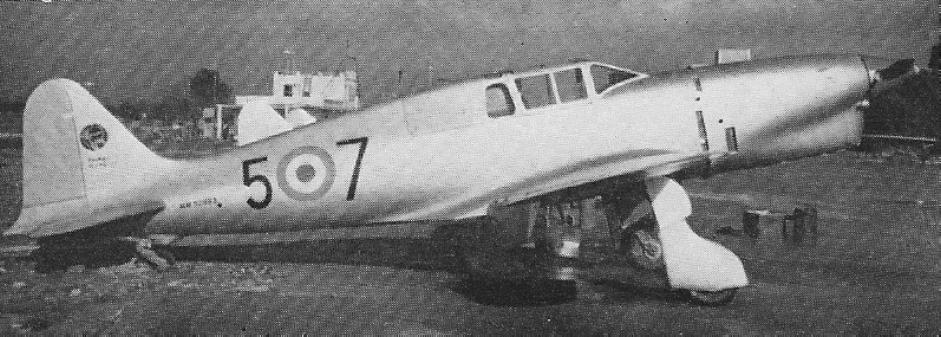
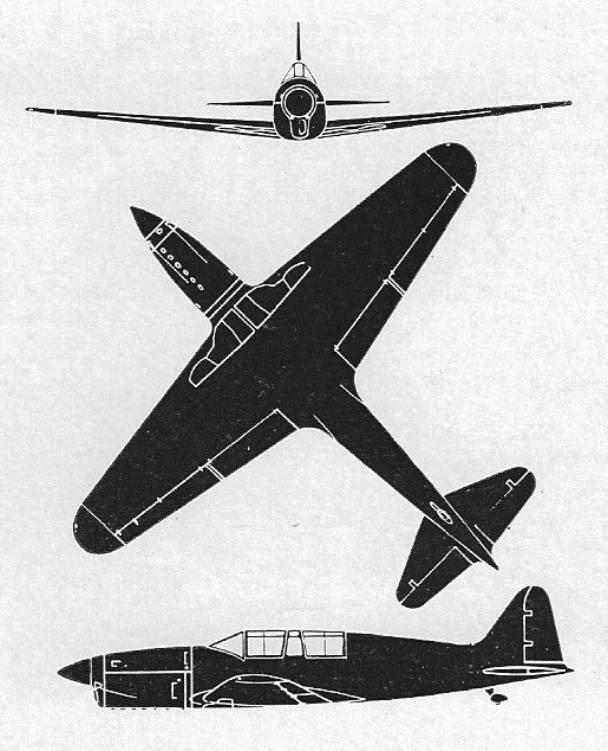
A further development of the basic design is the Super S.7, or Supersette, which is slightly larger than the S.7 and powered by a 340 hp de Havilland Gipsy Queen 70-3 engine.
S.7
Engine: 225 hp Alfa 115ter
Wingspan: 28 ft 10 in
Wing area: 137.8 sq.ft
Length: 26 ft 10 in
Empty weight: 2365 lb
Loaded weight: 3030 lb
Max speed: 224 mph
ROC: 1103 fpm
Super S.7 / Supersette
Engine: 340 hp de Havilland Gipsy Queen 70-3
Wingspan: 30 ft 6 in
Wing area: 148,5 sq.ft
Empty weight: 3030 lb
Loaded weight: 4300 lb
Max speed: 267 mph
ROC: 985 fpm
Supersette
Engine: Alfa Romeo 121 C, 395 hp
Wingspan: 30.512 ft / 9.3 m
Length: 26.804 ft / 8.17 m
Max take off weight: 4304.2 lb / 1952.0 kg
Max. speed: 227 kt / 420 km/h
Service ceiling: 24606 ft / 7500 m
Range: 594 nm / 1100 km
Crew: 2
 All Aero