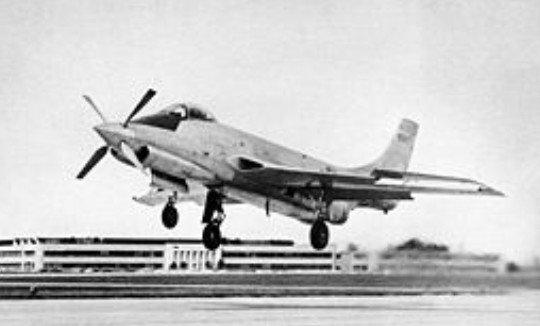
The Allison T38 (company Model 501) was an early large turboprop engine developed by Allison Engine Company during the late 1940s. Starting with a 19-stage axial compressor, eight can type combustion chambers, a 4-stage turbine driving the compressor and the extension shaft to the reduction gearbox, and initially rated at 2,000 shp (1,491.40 kW), the T38 first ran in 1947 and flew in the nose of a Boeing B-17 Flying Fortress test-bed on 19 April 1949, rated at 2,250 shp (1,677.82 kW). Problems with gearbox vibration and combustion were dealt with during the test programme and were mirrored by problems in the T40 programme. The engines fitted to the Convair CV-240-21 Turboliner were rated to 2,750shp.
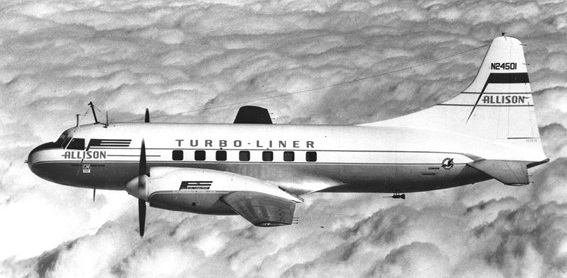
Although the only aircraft slated to receive the T38 as a production engine, the Convair T-29E, was cancelled, the T38 did power a converted Convair CV-240 (the CV-240-21 Turboliner, a project that would be abandoned due to engine problems), and was fitted in the nose of the McDonnell XF-88B to drive experimental supersonic propellers. Further development of the T38 provided the power sections for the Allison T40 as well as forming the basis for the Allison T56/Model 501 and the projected Allison T39.
Derivatives:
T39
A projected 9,000 shp (6,711.30 kW) development of the T38 which was cancelled before hardware had been produced.
T40
A 4,100 shp (3,057.37 kW) turboprop derivative composed of two T38s driving a common gearbox.
Applications:
CV-240-21 Turboliner
Convair T-29E (cancelled)
McDonnell XF-88B
 All Aero