
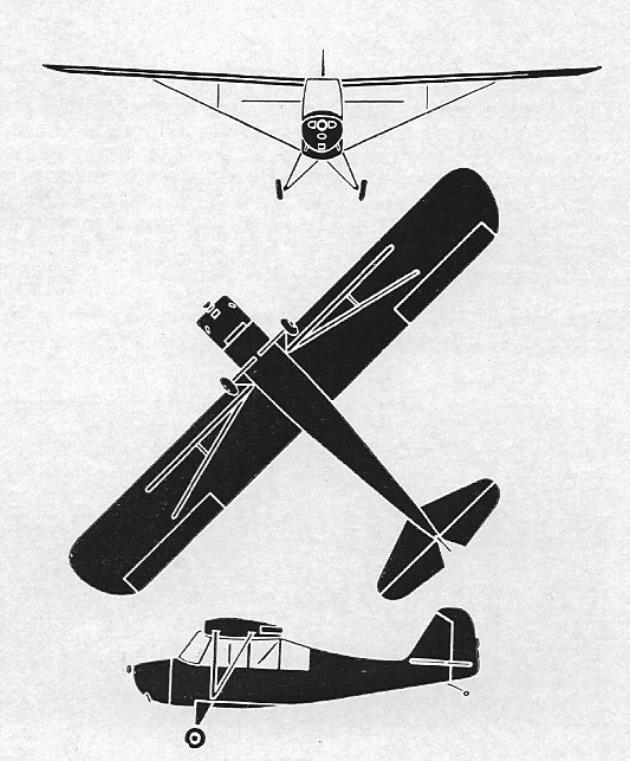
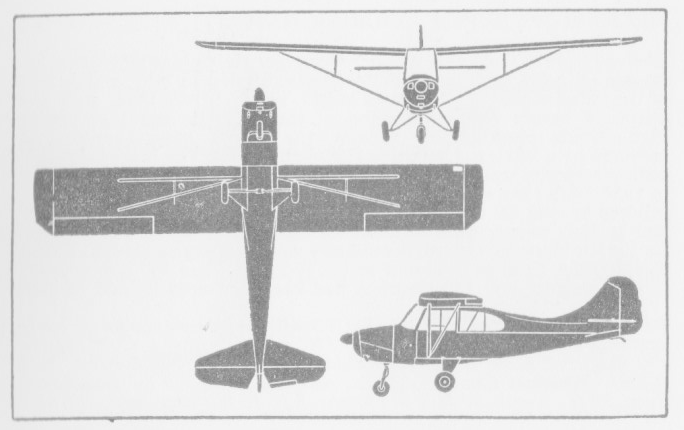
The Aeronea 7AC Champion, predecessor of the Citabria, was a derivative of the prewar Aeronca Tandem Trainer version of the Chief series. The original Champ, which first flew on 29 April 1944 piloted by Lou Wehrung, was powered by a 65-hp Continental engine and designated the 7AC. The basic 7AC Champion (7200 built) two-seater offered direct competition against the J-3 Cub. Most had a 65 hp engine but later models had 85 and 90 hp engines. The company built over 10,000 Champions and over 600 Army liaison derivatives between 1946 and 1951. The design proved to be popular, and Aeronca increased the plane’s power rating to 85 hp before the Champion Aircraft Corp. acquired the tooling and rights to the design in 1951. Variations included the Chief (1947) and Super Chief (1948).

The 1944 7AC and 7ACS Champion (ATC 759) were designed by Raymond F Hermes. First flown on 29 April 1944, piloted by Lou Wehrung, 7,200 were built, those for the USAAF as L-16.
7ACS, or S7AC, was the floatplane version. The 7AC first sold for $2,095, $2,395 in 1947 with 65 hp Continental engine.
The design was revived in 1954 as Champion Citabria, later Bellanca Citabria.
The 7BCM Champion of 1947 featured “No-bounce” gear, a reinforced fuselage and other refinements. 509 were built, all of which went to USAAF as the L-16A; prototype (NX3124E). The 7CCM Champion of 1948 (ATC 759) featured the larger 90hp Continental C-90-8F (O-205-1), a larger dorsal fin, and wing tanks. 125 were built, plus 100 for the USAAF as L-16B. The 1948 7DC, 7DCM, 7DCS Champion (ATC 759, 168 built) had the dorsal fin and larger tail. 7DCM was the Farm Wagon (with wood-lined cargo bin); the 7DCS / S7DC was the float version with a ventral fin. They were priced $2,510-2,665.
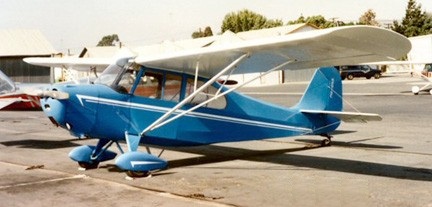
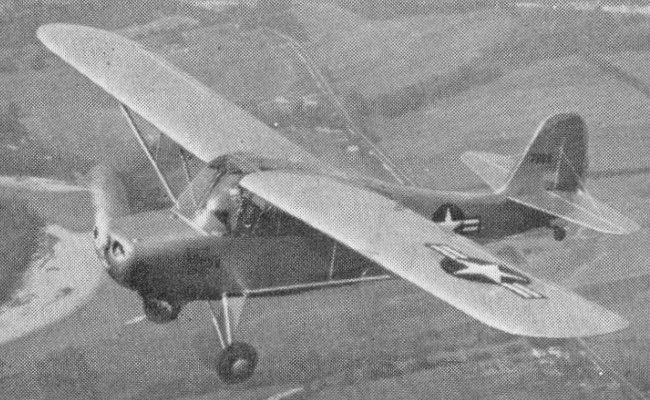
The military version first ordered by the U.S. Army was the L-16A with 85 hp Continental C85-12 engine. 509 were delivered; 47-788 to 47-1296, of which 376 were initially slated for National Guard units, and were been followed by 100 L-16B’s, 48-424 to 48-523, with 90h.p. Continental C-90-12F engines and dorsal fin. All are two-seaters for observation and liaison.
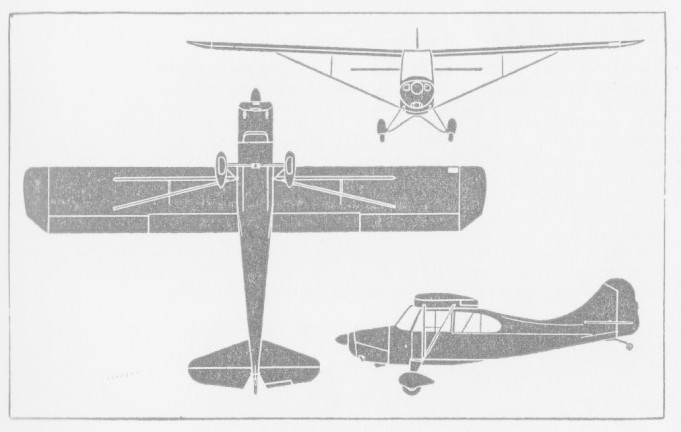
The 7EC, 7ECS Champion (ATC 759) of 1949 was the first Aeronca to offer a starter and generator. The 7ECS (or S7EC) was float version. Priced at $2,695 this became the Champion 7EC in 1955.This design appeared liberally modified in the 1958 Hindustan Aeronautics HAL-26 Pushpak 90hp trainer.
The Champion Tri Traveller two seat touring aircraft was developed from the Aeronca Model 7 Champion in 1955. In production were the 90 hp Model 7EC Traveller with a tailwheel undercarriage and the 7FC Tri Traveller with a nosewheel undercarriage. In 1959 the company delivered 274 aircraft. All up weight of the Tri Traveller is 1,500 lb, and it cruises at 108 mph over a range of 560 miles. One 7FC Champion protoype was built in 1949.
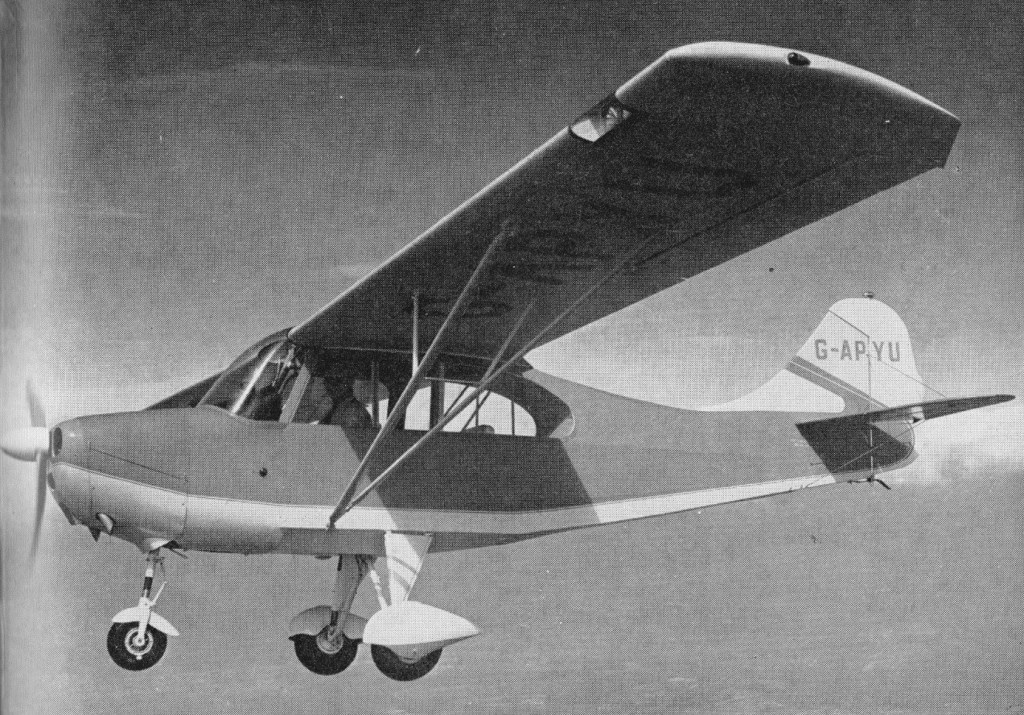
A three-seat version of the Tri-Traveller with a 140 hp Lycoming O-290-D2B engine was designated 7GC Sky-Trac.
Production began in February 1957 and continued with minor refinements until 1964 when production tapered off in favor of the 7ECA, a further improved version of the original airframe. The tri gear 7FC followed the 7EC, both followed by the aerobatic Citabria which continued in production in 1988.
The Champion Aircraft Corp was formed in 1954 to manufacture the former Aeronca 7EC Champion which was produced by Aeronca until 1950. The first Champion-built 7EC Traveller was completed in February 1955, and the 7GCB, is basically similar but has an increased wingspan, more powerful engine and high-lift flaps. A three-seat version, the 7GC Sky-Trac (140 hp Lycoming O-290-D2B), was ntroduced in 1958.
The Citabria versions of the post-war Aeronca 7AC Champion were introduced in 1964 by Champion Aircraft.
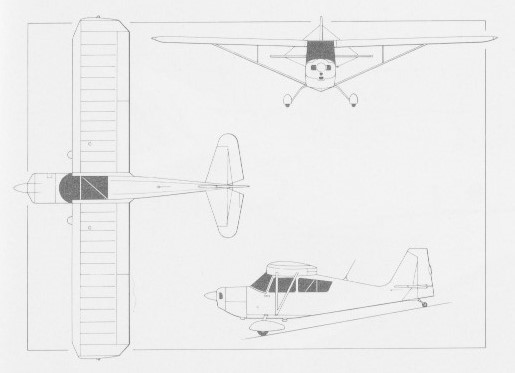
From the manufacturing line at Bellanca’s Osceola, Wisconsin plant. The Champion Model 8KCAB Decathlon is a close cousin to the Bellanca Citabria, the principle difference being its symmetrical NACA 1412 wing section, 2.5 foot shorter span, reinforced front spar, stronger, more closely spaced ribs and constant speed prop. Both planes come with 150 hp Lycoming IO 320 engines capable of prolonged inverted flight. The Citabria is approved for + 5 Gs and 2 Gs.
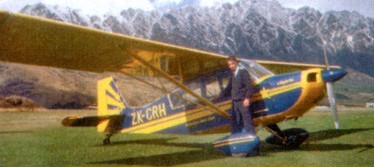
In 1968 Champion Aircraft Corp. came out with a 200-hp single-seat open cockpit version of its popular Citabria aerobatic two-seater for the pilot who wanted better aerobatic capability, but found no customers.
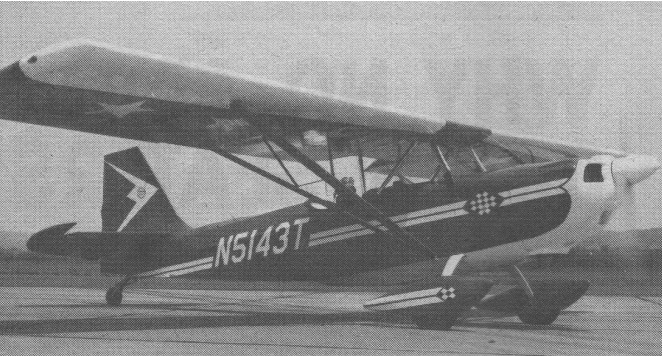
In 1970 production was taken over by Bellanca Aircraft.
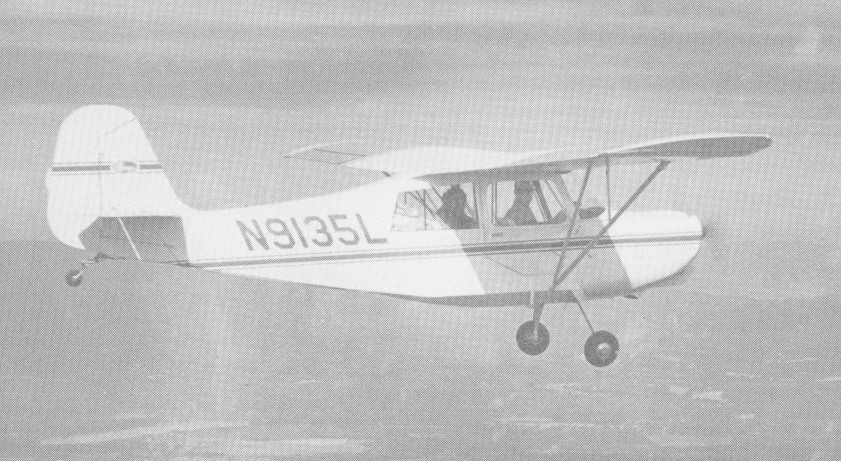
When ACA acquired the type certificate and restarted production in 1994 of the 7ECA, 7GCAA, and 7GCBC (using the Aurora, Adventure and Explorer names) they used a new metal spar wing with a 100 pound gross weight increase to 1750 pounds for the 7ECA and 7GCAA and a 150 pound increase to 1800 pounds for the slightly longer spanned and flap equipped 7GCBC.
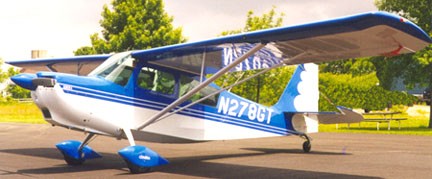
The 1994 7GCBC Citabria Explorer sold for $69,900 base (1998), $78,900 base (2000). Thirty-eight were sold by the end of 1997.
The 1995 7ECA Citabria Aurora (ATC 759) with electrical system sold for $59,900 base (1998), $66,950 base (2000). Eleven were sold by the end of 1997.
The 1997 7GCAA Citabria Adventure sold for $66,900 base (1998), $75,900 base (2000). Three were sold by the end of 1997.
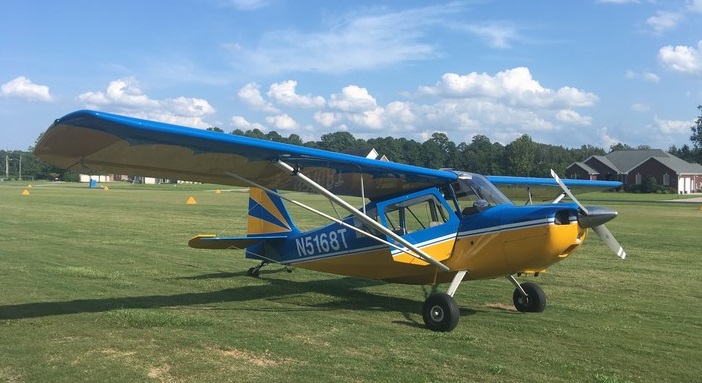
The Citabria Pro, designated Model 8KCAB, was specifically designed for advanced sportsman aerobatic competition. The Pro utilises the bottom truss structure and tail of the akro Citabria, but from there on is new. The wing is built up with a wood spar, aluminium ribs, and fibreglass tips, all fabric covered. The Airfoil is NACA 1412. There is a 20 USG tank located in each side, plus a header tank in the fuselage. The fuselage employs a tubular structure with an aluminium top forward section, the entire body is also Ceconite covered, then painted with Durepox. Nose is of fibreglass. The Citabria Pro is classed as an unlimited aerobatic aircraft with G limits of +6 and -5.
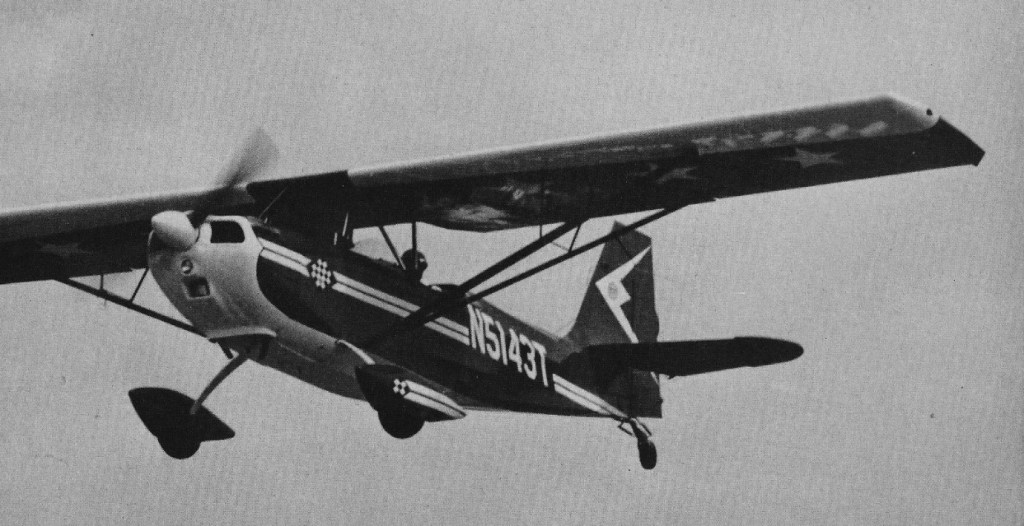
Many older Citabrias have been updated with the new metal spar wings and have received the same gross weight increase.
7AC / L-16
1944 (ATC 759)
Engine: Continental C-65-8, 65 hp:
Wing span: 35 ft 2 in
Length: 21 ft 6 in
Gross weight: 1220lb
Empty weight: 740lb
Payload: 510 lb
Fuel capacity: 13 USG
Max speed: 95 mph
Cruise speed: 85 mph
Initial climb rate: 370 fpm
Stall speed: 38 mph
Range: 250 nm
Takeoff distance, 50 ft: 632 ft
Service ceiling: 12,500 ft
Landing distance, 50 ft: 885 ft
Seats: 2
Price 1944: US$2,095
Price 1947: US$2,395
Engine: Continental, 85 hp
Gross weight: 1300lb
Empty weight: 810lb
Fuel capacity: 18.5 USG
Top speed: 102 mph
Cruise speed: 92 mph
Stall speed: 44 mph
Initial climb rate: 750 fpm
Range: 315 nm
Seats: 2
7AC
Engine: Continental A65-8, 65 hp
Wing span: 37 ft 6 in/ 11.43 m
Length: 25 ft 3 in / 7.7 m
Height: 7 ft / 2.13 m
Empty weight: 1150 lb / 522 kg
Gross weight: 2050 lb / 930 kg
Max speed: 129 mph / 208 kph
Max range: 450 mi / 724 km
Service ceiling: 12,400 ft / 3780 m
Bellanca 7ACA Champ
Engine: Franklin 2A-120-B, 60 hp
Wingspan: 35 ft 1.5 in / 10.71 m
Length: 21 ft 9.5 in / 6.64 m
Empty weight: 750 lb / 340 kg
MTOW: 1220 lb / 553 kg
Cruise 75% pwr: 72 kt / 83 mph / 133 kph
Max ROC SL: 400 fpm / 122 m/min
Range max fuel: 260 nm / 300 mi / 483 km
Seating: 2 tandem
Baggage: 40 lb / 18 kg
7ACS / S7AC Champion
1944 (ATC 759) floatplane version
Engine: Continental C-65-8, 65hp
Wing span: 35 ft 2 in
Length: 21 ft 6 in
Payload: 510 lb
Max speed: 95 mph
Cruise speed: 85 mph
Stall speed: 38 mph
7BCM Champion
1947 (ATC 759)
Engine: Continental C-85-8, 85hp
L-16A
Engine: Continental O-190-1, 85hp
Span: 35 ft. 2 in
Weight; 1,450 lb.
Speed: 110 m.p.h.
Number built: 509 [47-788/1296], of which 376 were initially slated for National Guard units.
7CCM Champion
1948 (ATC 759)
Engine: Continental C-90-8F, 90hp
7DC Champion, 7DCM Farm Wagon
1948 (ATC 759)
Engine: Continental C-85-8F, 85hp
Payload: 491 lb
Max speed: 108 mph
Cruise speed: 95 mph
Stall speed: 42 mph
Price: US$2,510-2,665
L-16B
Engine: Continental O-205-1, 90hp.
Number built: 100 (48-424/523)
L-16B
Engine: Continental C90-12F, 90hp.
Wing span: 35 ft 2 in
Wing area: 170.22 ft
Length: 21 ft 6 in
Height: 7 ft
Empty weight: 890 lb
Loaded weight: 1450 lb
Max speed: 110 mph
Cruise: 90 mph
ROC: 800 fpm
Range: 350 mph
Seats: 2
S7DC / 7DCS Champion
1948 (ATC 759)
Engine: Continental C-85-8F, 85hp
Payload: 491 lb
Max speed: 108 mph
Cruise speed: 95 mph
Stall speed: 42 mph
Price: US$2,510-2,665
Float version with a ventral fin.
7EC, 7ECS Champion
1949 (ATC 759)
Engine: Continental C-90-12F, 90hp
Gross weight: 1450 lb
Empty weight: 820 lb
Payload: 560 lb
Fuel capacity: 18.5–24 USG
Max speed: 110 mph
Cruise speed: 100 mph
Initial climb rate: 315 fpm
Stall speed: 45 mph
Range: 290 nm
Seats: 2
Undercarriage: fixed, tail wheel
The 7ECS / S7EC was the float version. Became the Champion 7EC in 1955.
7ECA Aurora
Engine: 1 x Lycoming O-235-C1, 115 hp.
Seats: 2.
Wing loading: 10 lb/sq.ft.
Pwr loading: 14.3 lb/hp.
Gross wt: 1650 lb.
Empty wt: 1067 lb.
Equipped useful load: 553 lb.
Payload max fuel: 343 lb.
Range max fuel/75% pwr: 399nm/3.7hr.
Range max fuel / 55% pwr: 600 nm/ 6.3 hr.
Service ceiling: 12,000 ft.
75% cruise: 107 kt.
Cruise 65%: 114 mph.
Endurance 65%: 5.6 hr.
55% cruise: 96 kt.
Stall, clean: 36 kt.
1.3 Vso: 57 kt.
ROC: 725 fpm.
Min field length: 890 ft.
Fuel cap: 210 lb.
1995 ACA 7ECA Citabria Aurora
Engine: 118hp Lycoming O-235-K2C
Wingspan: 33’6″
Length: 22’9″
Useful load: 224 lb
Max speed: 121 mph
Cruise: 116 mph
Stall: 50 mph
Range: 556 mi
Ceiling: 13,000′
Seats: 2
Champion 7FC Tri-Traveller
Engine: 95 hp Continental C90-12F
Wingspan: 33 ft 5 in
Length: 21 ft 8 in
Height: 8 ft 8 in
Wing area: 165 sq.ft
Empty weight: 968 lb
Max loaded weight: 1450 lb
Max speed: 135 mph
Cruise: 75%: 108 mph
ROC: 900 fpm
Range econ cruise: 500 mi
Service ceiling: 12,000 ft
1997 ACA 7GCAA Citabria Adventure
Engine: 160hp Lycoming O-320-B2B
Length: 22’2″
Useful load: 450 lb
Max speed: 140 mph
Cruise: 135 mph
Stall: 50 mph
Ceiling: 17,000′
Champion 7GCB Challenger
Engine: 150 hp Lycoming O-320-A2B
Wingspan:34 ft 5.5 in
Length: 22 ft 1 in
Height: 6 ft 10.5 in
Wing area: 170.22 sq.ft
Empty weight: 1050 lb
Normal loaded weight: 1650 lb
MTOW: 2325 lb
Max speed: 125 mph
Cruise 75%: 115 mph at 8000 ft
ROC: 1145 fpm
Service ceiling: 17,500 ft
Max range: 630 mi
1994 ACA 7GCBC Citabria Explorer
Engine: 160hp O320-B2B
Length: 22’2″
Useful load: 550 lb
Max speed: 132 mph
Cruise: 128 mph
Stall: 46 mph
Range: 385 mi
Ceiling: 15,500′
7FC Champion
1949
Engine: Continental C-90-12F, 90hp
Tricycle gear version of 7EC: 1 prototype.
7FC Tri-Traveller
Engine: Continental C90 12F, 95 hp.
Undercarriage: fixed, nose wheel.
MAUW: 1500 lb.
Cruise: 108 mph.
Range: 560 miles.
Champion 7GCAA
Engine: Lycoming O-320-A2B, 150 hp
Wingspan: 33 ft 5 in / 10.19 m
Length: 22 ft 8 in / 6.91 m
Empty weight: 1037 lb / 470 kg
MTOW: 1650 lb / 748 kg
Max cruise75% 8000 ft /2440m: 109 kt / 125 mph / 201 kph
Max ROC SL: 1120 fpm / 341 m/min
Service ceiling: 17,000 ft / 5180 m
Range max cruise 39 USG fuel: 465 nm / 537 mi /865 km
Seats: 2 tandem
Baggage capacity: 110 lb /45 kg
7GCAA Adventurer
Engine: 1 x Lycoming O-320-A2D, 150 hp.
Seats: 2.
Wing loading: 10 lb/sq.ft.
Pwr loading: 11 lb/hp.
Gross wt: 1650 lb.
Empty wt: 1120 lb.
Equipped useful load: 500 lb.
Payload max fuel: 290 lb.
Range max fuel/75% pwr: 381nm/3.4hr.
Range max fuel / 55% pwr: 494 nm/ 4.8 hr.
Service ceiling: 17,000 ft.
75% cruise: 112 kt.
55% cruise: 104 kt.
Stall, clean: 36 kt.
1.3 Vso: 57 kt.
ROC: 1120 fpm.
Min field length: 755 ft.
Fuel cap: 210 lb.
1997 7GCAA American Champion Adventure
Engine: Lycoming O-320-B2B, 160 @ 2700 @ SL
TBO hours: 2000
Fuel type: 100LL
Propeller: Sensenich Fixed
Max ramp weight (lbs.): 1650
Max landing weight (lbs.): 1650
Gross weight (lbs.): 1650
Empty weight, std. (lbs.): 1170
Useful load, std. (lbs.): 480
Payload, full std. fuel (lbs.): 270
Usable fuel, std. (USgals.): 35
Oil capacity (qts.): 8
Wingspan: 33 ft. 5 in.
Overall length: 22 ft. 1 in.
Height: 6 ft. 10 in.
Wing area (sq. ft.): 165
Wing loading (lbs/sq. ft.): 10
Power loading (lbs/hp.): 10.3
Wheel track (in.): 78
Wheel size (in.): 6.00 x 6
Seating capacity: 2
Cabin doors: 1
Cabin width (in.): 29
Cabin height (in.): 48
Baggage capacity (lbs.):100
Max level speed (knots): 120
Cruise speed (kts) 75% power: 115
Cruise speed (kts) 65% power 111
Cruise speed (kts) 55% power 102
Max range (with reserve) (nm) 75% power: 414
Max range (with reserve) (nm) 65% power: 445
Max range (with reserve) (nm) 55% power: 530
Fuel consumption (USgph) 75% power: 8.5
Fuel consumption (USgph) 65% power: 7.6
Fuel consumption (USgph) 55% power: 6.1
Stall speed (kts.): 47.5
Best rate of climb (fpm): 1270
Service ceiling (ft.): 17,000
Takeoff ground roll (ft.): 360
Landing ground roll (ft.): 400
7GCB Challenger
7GCBA Agricultural
7GCBC Citabria
Engine: 1 x Lycoming O-320-A2D, 150 hp.
Seats: 2.
Wing loading: 9.7 lb/sq.ft.
Pwr loading: 11 lb/hp.
Gross wt: 1650 lb.
Empty wt: 1150 lb.
Equipped useful load: 470 lb.
Payload max fuel: 260 lb.
Range max fuel/75% pwr: 378nm/3.4hr.
Range max fuel / 55% pwr: 489 nm/ 4.8 hr.
Service ceiling: 17,000 ft.
75% cruise: 111 kt.
55% cruise: 103 kt.
Stall: 30-35 kt.
1.3 Vso: 39 kt.
ROC: 1145 fpm.
Min field length: 567 ft.
Fuel cap: 210 lb.
7HC DX
Bellanca Citabria 7KCAB
Engine: 1 x Lycoming IO-320-E2B, 150 hp.
Seats: 2.
Wing loading: 10 lb/sq.ft.
Pwr loading: 11 lb/hp.
Gross wt: 1650 lb.
Empty wt: 1140 lb.
Equipped useful load: 480 lb.
Payload max fuel: 270 lb.
Range max fuel/75% pwr: 381 nm/3.4 hr.
Range max fuel / 55% pwr: 494 nm/ 4.8 hr.
Service ceiling: 17,000 ft.
75% cruise: 112 kt.
55% cruise: 104 kt.
Stall: 36 kt.
1.3 Vso: 47 kt.
ROC: 1120 fpm.
Min field length: 755 ft.
Fuel cap: 210 lb.
Undercarriage: fixed tailwheel.

 All Aero