
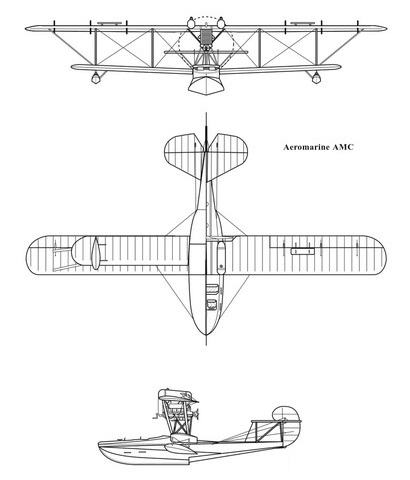
Similar in configuration to the Curtiss HS series, the AMC (Aeromarine Metal Commercial) was an effort to introduce a civil flying boat of conventional two-bay biplane design that possessed a more modern airframe, most notably an all-duraluminium hull and a dural-framed empennage.
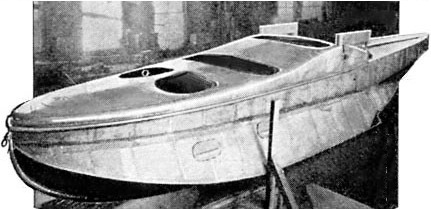
The 1923 AMC was built with spruce I-beam spars and ribs, dural-framed empennage; fabric-covered wings and tail; all-duraluminum hull. The AMC was designed to replace the 75s of Aeromarine Airways and first flew on 1 June 1923.
The AMC flew for the first time in June 1923 and soon afterwards commenced a trial route between New York and San Juan, Puerto Rico, however, Aeromarine and its airline subsidary ceased operations in late 1923, and no more AMCs were completed.
The Morro Castle II can be recognized by its shorter lower wings.

While not a commercial success, the AMC did establish a new standard for flying boats with more durable metal hulls.

Long before Photoshop, this bit of “creative enhancing” asks more than it tells. It could be a short-wing version of AMC, dubbed Morro Castle II, but its placement in an Egyptian setting is a mystery—perhaps for an ad with a relevant headline. The plane appears to be pasted on the background—a small seam below the rudder hinge is visible. If it is supposed to be landing, it is doomed. The prop is stopped and the pilot sits on the coaming away from the controls, which are set for a severe left hand dive into the Nile.
Engine: Liberty 12, 400 hp
Prop: 2 blade wooden fixed pitch
Wing span (upper): 65 ft 0 in
Wing span (lower): 48 ft 7 in
Length: 32 ft 10 in
Payload: 2440 lb
Max speed: 98 mph
Cruise speed: 80 mph
Stall speed: 50 mph
Ceiling: 14,000 ft
Seats: 7-9
 All Aero