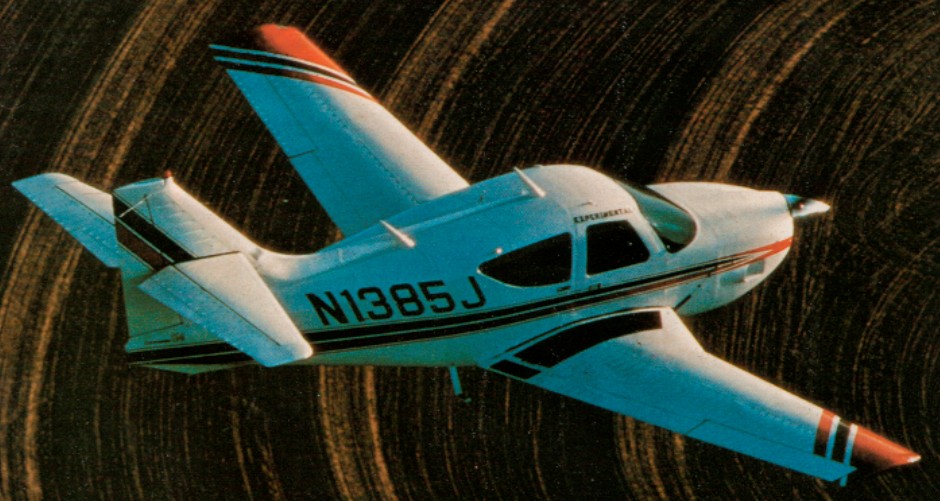
In its original conception, the 112 was to be a 120 mph fixed gear airplane that could compete with the Cessna 172. As the decision was made to begin with a retractable and compete with Mooneys, Arrows and Sierras, a Rockwell survey showed that most pilots would give up a little speed for a really comfortable cabin that could be entered from either side. From this came the wide body 112 series. The single-engined Model 112 was delivered to customers from 1972.

Aero Design Commander 112 / 114 Article
The airplane was not right in the beginning, when production glitches were numerous, so Rockwell recalled and modified the first batch of airplanes and moved production from the Albany, Georgia plant to Rockwell’s General Aviation Division plant in Bethany, Oklahoma, where their prop twins are made. The doors were part of the modification program of the original 112s. Original 112 doors were made of fiberglass and fitted so poorly that they shrieked in the wind and leaked in the rain. Metal doors, with plenty of latch points, cured that. (The metal doors were incorporated on existing airplanes, at no cost to the customer.) The Bethany built 112A is top quality.
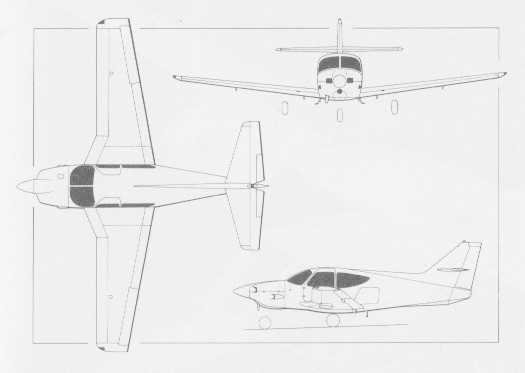
Rockwell offered two 112 derivatives, the 114 and the 112TC. The 114, powered by a fuel injected 260 hp engine (compared with the 112’s 200 hp engine) in the same four place airframe as the 200 hp Model 112A, was first on the scene, beating the 112TC (with a turbocharged 210 hp Lycoming) to certification by at least a month. The 114’s design goal apparently was to answer the most frequently voiced complaint about the 112A the limited payload that resulted from powering a big airplane with a relatively small engine. The 114, with a 260 hp Lycoming engine, address this problem; its useful load is 391 pounds greater than the 112’As and provides 10 percent more speed. The airplanes look almost exactly alike. The more powerful six cylinder engine fitted under the same cowl used for the four cylinder 200. The top cowling comes off for access. The only visible differences between the 112A and the 114 are at the front of the cowling where a bulge is necessary to make room for the 114’s alternator and where the prop governor pokes out. The bulge has a slot at its bottom to facilitate cooling the alternator. Only 26.5 pounds of structure were added, primarily in the area of the main landing gear attachments to absorb greater landing loads. The 112A has a maximum landing weight of 2,550 pounds, so the 114 can touch down with almost 600 pounds more. The tires and brakes on the 114 are a bit larger than on the 112A, too, and there are some small additional items in the tail cone. In total, the 114’s standard empty weight is shown as 99 pounds higher than for the 112A.
Rockwell also introduced a version of the 112A that, is powered by the Lycoming TO 360, which is essentially the 112A engine fitted with a fixed waste gate turbocharger. Its ability to produce a higher manifold pressure allows the engine to develop 210 hp up to nearly 14,000 feet. With that engine, the Rockwell 112TC A can carry about 140 more pounds of payload than the 112A when both are filled with 399 pounds of fuel. The 112TC-A is equipped with auto boost; a throttle controlled turbocharger. You boost the engine to maximum allowable simply by monitoring the manifold pressure gauge.
The Commander 114B received certification in 1973 and is essentially a 112A with the 260hp engine.
In the Magnum 300 Machen puts in the 300 hp version of the same 540 cubic inch Lycoming six that, in derated form, powers the 114. A new, two blade aluminum Hartzell or an optional three blade Hoffmann prop of composite construction and the battery migrates to the very tip of the tail cone to redress the balance. A 25 pound optional soundproofing kit reduces cabin noise by seven decibels. The Machen Magnum’s STC raises the gross weight to 3,000 pounds, with a zero fuel weight of 2,580. The entire 420 pound fuel load can always be carried, but cabin load is limited to about 790 pounds. Machen was seeking an STC on two additional seats in the baggage space behind the rear seats, with a placard maximum of 200 pounds. The 300 hp Magnum 300’s performance includes cruising speeds at 75 percent in the 155 160 knot range at 6,500 feet, with fuel flows of around 15 or 16 USG per hour. With a usable fuel capacity of 68 gallons, the range at maximum cruise speed with a 45 minute reserve is about 550 nautical miles. Machen’s scheme calls for a week of downtime to replace the owner’s 200 hp IO-360, with five hours flying time for break in and debugging. The bigger engine just fits in the standard cowling, part of the spinner disappearing into the front of the cowling. The optional Hoffmann propeller ($1,000 more than the two blade Hartzell) is of composite construction, the main part of the blade a fiberglass laminate to which is bonded a metal leading edge for abrasion resistance. A three blade prop is quieter than two blades; but it does not produce more thrust.
The Model 111A was generally similar to the Model 112 but with a 180 hp Lycoming O-360-A1G6 and non-retractable undercarriage. It was a development aircraft only.
111A
Engine: 180 hp Lycoming O-360-A1G6
Undercarriage: non-retractable
112
Engine: Lycoming IO-360-C1D6, 200 hp
Wingspan: 32 ft 10,75 in / 10.03 m
Length: 25 ft 0 in / 7.52 m
Empty weight: 1530 lb / 694 kg
MTOW: 2550 lb / 1157 kg
Cruise 75% 7500ft / 2285m: 152 kt / 175 mph / 281 kph
ROC SL: 100 fpm / 305 m/min
Service ceiling: 17,000 ft / 5180 m
Range no res: 981 nm / 1130 mi / 1818 km
Seats: 4
Cabin length: 9 ft 7.5 in / 2.93 m
Cabin width: 3 ft 11 in / 1.19 m
Cabin height: 4 ft 1 in / 1.24 m
Baggage compartment: 21 cu.ft / 0.59 cu.m / 200 lb / 90.7 kg
111A
Engine: 180 hp Lycoming O-360-A1G6
Undercarriage: non-retractable
112A
Engine: Lycoming IO 360 C1D6, 200 hp
TBO: 1,600 hr
Propeller: Hartzell 76 inch dia. 2 blade
Length: 24 ft 10 in
Height: 8 ft 5 in
Wingspan: 32 ft 9 in
Wing area: 153 sq.ft
Wing loading: 17.4 lb/sq.ft
Seats: 4
Empty weight: 1,761 lb
Useful load: 889 lb
Payload full fuel: 481 lb
Gross weight: 2,650 lb
Power loading: 13.3 lb/hp
Fuel cap (std): 68 USG/408 lb
Baggage area: 21 cu.ft
Rate of climb: 1,020 fpm
Service ceiling: 13,900 ft
Maximum speed: 148 kt
75% Cruise 6,000ft: 140 kt
55% cruise 5,000ft: 119 kt
Stall speed (clean): 66 kt
Stall (gear / flaps down): 54 kt
Min runway: 1,585 ft
Range @ max cruise (45 min res., std. tanks): 765 nm.
Range @ econ cruise (45 min res., std. tanks): 850 nm
Duration @ max cruise (no res., std. tanks): 6.1 hr
112B
Engine: Lycoming IO-360-C1D6, 200 hp TBO: 2000 hrs
Fuel type: 100LL
Propeller: Constant speed
Seats: 4
Wing loading: 17.1 lb/sq.ft
Pwr loading: 14 lb/hp
Gross wt: 2800 lb
Empty wt: 1773 lb
Equipped useful load: 933 lb
Payload max fuel: 525 lb
Range max fuel/75% pwr: 831 nm/5.8 hr
Range max fuel, 55% pwr: 945 nm/ 7.8 hr
Service ceiling: 15,050 ft
75% cruise: 142 kt.
55% cruise: 122 kt
Stall: 51-56 kt
1.3 Vso: 66 kt
ROC: 950 fpm
Min field length: 1829 ft
Fuel cap: 288/408 lb
Undercarriage: retractable
112 TC
Engine: Lycoming TO 360 ClA6D with factory installed Rajay turbocharger, 210 hp
TBO: 1,200 hrs
Prop: Hartzell two blade, constant speed, 77 in. dia
Length: 25 ft. 5 in
Height: 8 ft 5 in
Wingspan: 35 ft. 7 in
Airfoil: NACA 63.415
Aspect ratio: 7.7
Wing area: 163.8 sq.ft
Wing loading: 17.4 lb/sq.ft
Seats: 4
Empty weight: 1,820 lb
Useful load: 1,030 lb
Payload with full fuel: 622 lb
Gross weight: 2,850 lb
Power loading: 13.6 lb/hp
Fuel cap (std): 48 USG/288 lb
Fuel capacity (optl): 68 USG/408 lb
Baggage cap: 200 lb
Baggage area: 21 cu.ft
Minimum runway: 2,280 ft
Rate of climb: 888 fpm
Service ceiling: 20,000 ft
Max speed @ 15,000 ft: 191 mph, 164 kt
Stall speed (clean): 56 kt
Stall (gear, flaps down): 51 kt
Cruise (75 % @ 8,000 ft): 135 kt
Economy cruise (55% @ 8,000 ft): 129 kt
Range max cruise (45min res, std tanks): 401 nm
Range @ econ cruise (45 min res, std tanks): 623 nm
Endurance @ max cruise (no res, std tanks): 3.7 hr
112-TCA
Engine: Lycoming TO-360-C1A6D, 210 hp.
TBO hrs: 1800
Propeller: Hartzell 2 blade CS/77
Fuel type: 100LL
Wingspan: 35 ft 7 in
Overall length: 25 ft 1 in
Height: 8 ft 5 in
Wing area: 163.8 sq.ft
Wing loading: 18 lb/sq.ft
Power loading: 14 lb/hp
Gross wt: 2950 lb
Empty wt: 2035 lb
Max landing wt: 2950 lb
Equipped weight: 1900 lb
Useful load, std: 1050 lb
Useful load (equipped): 1050 lb
Baggage cap: 200/22 lb
Payload, full std. fuel: 630 lb
Fuel cap: 68 USG/408 lb
Equipped useful load: 1022 lb
Payload max fuel: 614 lb
Undercarriage: tri/retractable
Wheel base: 6 ft 10 in
Wheel track: 10 ft 11 in
Tires (mains): 7.00 x 6
Tires (nose): 5.00 x 5
Cabin doors: 2
Cabin width: 44 in
Cabin height: 49 in
Seats: 4
1.3 Vso: 68 kt
Service ceiling: 20,000 ft
Min field length: 2100 ft
T/O 50-ft. obstacle: 1750 ft
Max level speed: 170kt/196mph @ 20,000ft
ROC: 914 fpm
Cruise 75% power @ 24,000 ft.: 163 kt /196 mph
Cruise 65% power @ 6,500 ft.: 154 kt /177 mph
Cruise 55% power @ 16,000 ft.: 137 kt /158 mph
Stall speed (gear, flaps up): 58 kt /67 mph
Stall speed (gear, flaps down): 54 kt /62 mph
Fuel consumption 75% power: 13.2 USGph
Fuel consumption 65% power: 10.0 USGph
Fuel consumption 55% power: 8.5 USGph
Range max fuel/75% pwr: 751 nm/4.5 hr
Range max fuel/55% pwr: 1037 nm/ 7.3 hr
Max range (w/ res) 75% power: 665 nm / 765 sm
Max range (w/ res) 65% power: 835 nm / 960 sm
Max range (w/ res) 55% power: 900 nm / 1035 sm
114
Engine: Lycoming IO 540 T4A5D, 260 hp.
TBO: 2,000 hrs
Prop: constant speed, two blade, 77 in dia
Length: 24 ft. 10 in
Height: 8 ft 5 in
Wingspan: 32 ft 9 in
Wing area: 152 sq.ft
Wing loading: 20.7 lb/sq.ft
Seats: 4
Empty wt: 1,990 lb
Useful load: 1,150 lb
Gross weight: 3,140 lb
Payload with full fuel: 742 lb
Power loading: 12.1 lb/hp
Usable fuel: 68 USG/408 lb
Min runway requirement: 1,650 ft
Rate of climb: 1,054 fpm
Service ceiling: 16,800 ft
Max speed: 160 kt
Stall speed, clean: 59 kt
Stall speed, gear/flaps down: 55 kt
Max cruise (75% power @ 2,500 rpm): 151 kt
Economy cruise (55 % power 2,300 rpm): 132 kt
Range at max cruise (45 min res): 615 nm
Range at economy cruise (45 min res): 685 nm
Duration at max cruise, no res: 5.0 hrs
114A
Engine: Lycoming IO-540, 260 hp
Cruise: 150 kt
Seats: 4
U/C: Retract nose
Useful load: 1350 lb
MTOW: 3140 lb
ROC: 1054 fpm
Range: 820 sm
114B
Engine: Lycoming IO-540-T4B5, 260hp
TBO: 2000 hrs
Propeller: Constant speed
Landing gear: Tri/Retr
Gross weight: 3260 lb
Fuel (gals.): 68
Empty weight, std: 2102 lb
Useful load, std: 1158 lb
Wingspan: 32 ft. 9 in
Overall length: 24 ft 11 in
Height: 8 ft. 5 in
Wing area: 152 sq.ft
Seating capacity: 4
Cabin width: 47 in
Cabin height: 49 in
Baggage capacity: 200 lb
Cruise speed 75% power: 160 kt
Cruise speed 65% power: 155 kts
Max range (w/res) 75% pwr: 636 nm
Fuel burn 75% power: 14.3 USGph
Max range (w/res) 65% pwr: 705 nm
Fuel burn 65% power: 12.6 USGph
Stall speed (gear, flaps dn): 54 kt
Best rate of climb: 1070 fpm
Service ceiling: 16,800 ft
Takeoff ground roll: 1145 ft
Landing ground roll: 720 ft
114TC
Engine: Lycoming TIO-540-AG1A, 200 hp
TBO: 2000 hr
Propeller: Const. spd.
Landing gear type: Tri/Retr.
Gross weight: 3305 lb
Empty weight, std: 2152 lb
Useful load, std: 1153 lb
Fuel capacity: 88 USgals
Wingspan: 32 ft 9 in
Overall length: 24 ft 11 in
Height: 8 ft 5 in
Wing area: 152 sq.ft
Seating capacity: 4
Cabin width: 47 in
Cabin height: 49 in
Baggage capacity: 200 lb
Cruise speed 75% power: 187 kts
Cruise speed 65% power: 169 kts
Best rate of climb: 1050 fpm
Service ceiling: 25,000 ft
Takeoff ground roll: 1408 ft
Landing ground roll: 734 ft
Max range (w/res) 75% pwr: 670 nm
Fuel burn 75% power: 16.3 USgph
Max range (w/res) 65% pwr: 780 nm
Fuel burn 65% power: 14.1 USgph
Stall speed (gear, flaps down): 59 kt
 All Aero